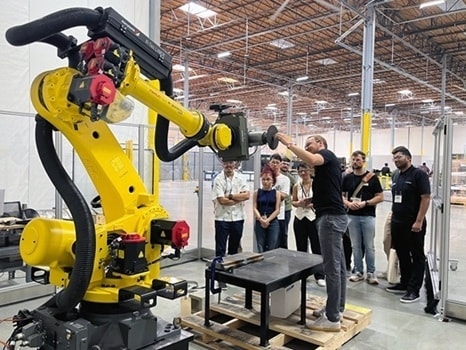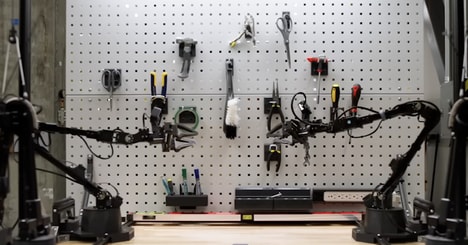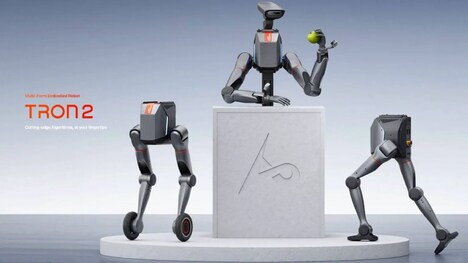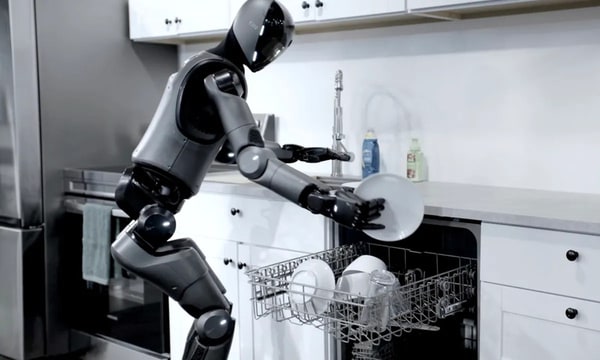
Linux Foundation’s Newton is added to the foundation's portfolio to advance robotics learning. Co-developed by Disney Research, Google DeepMind, and NVIDIA, the platform centers on GPU-accelerated simulations that help robots practice complex, contact-heavy tasks in virtual environments. Its core differentiator is the blend of high-fidelity physics, open standards, and community governance under a neutral foundation.
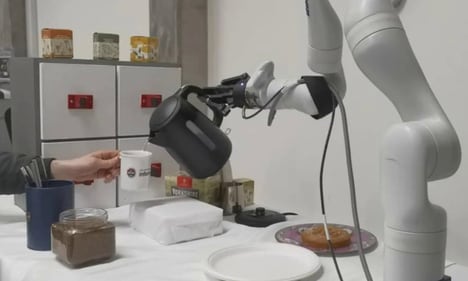
Built on NVIDIA Warp and OpenUSD, Newton supports multiple physics solvers and an extensible architecture to model challenging real-world conditions. Developers can rehearse scenarios such as walking over snow or gravel and manipulating fragile items like cups and fruit before deploying hardware. Early collaborators include academic institutions and robotics-focused companies that are already using the engine to explore generalist robot behaviors.
For users, Newton provides faster, more cost-effective experimentation with fewer real-world trial-and-error cycles. Researchers can share tools, datasets, and best practices while relying on a shared, high-performance infrastructure.
Image Credit: Shutterstock / Summit Art Creations
Key Themes Behind This Trend
- Gpu-accelerated Simulations
- Harnessing the power of GPU-accelerated simulations allows for realistic virtual environments where robots can practice complex tasks, speeding up development and reducing physical testing.
- Open-source Robotics Platforms
- Open-source platforms like Newton promote collaboration among developers and researchers, facilitating shared advancements in robotics through community-driven efforts.
- Virtual Environment Training
- Virtual environment training provides a safe and cost-effective platform for robots to learn and optimize performance before being deployed in real-world scenarios.
Where This Applies
- Robotics
- The robotics industry gains efficiency and innovation potential with platforms like Newton that accelerate the deployment of robots through advanced simulation technologies.
- Simulation Software
- Simulation software industry sees new growth opportunities by offering highly detailed, physics-based virtual environments for robotics and other complex applications.
- Research and Development
- Research and development sectors benefit from collaborative tools like Newton, enabling wider access to high-performance infrastructures that catalyze innovation.