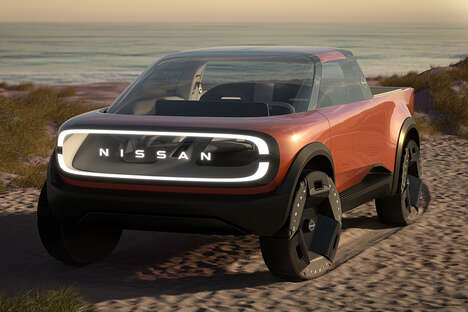
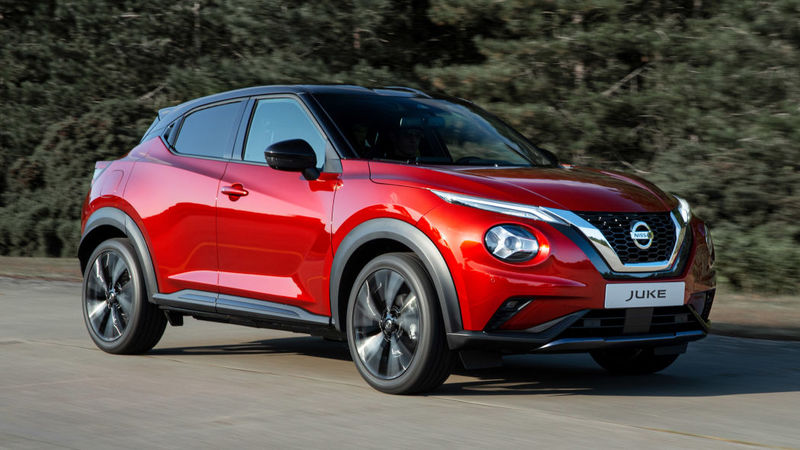
The next-gen Nissan Juke has been unveiled to European markets and it features a simplified aesthetic. Notably, the headlights have been altered into a main grille design. However, the car still has prominent headlights. The fenders were previously rounded, however now they have been widened to offer a cleaner look.
The next-gen Nissan Juke has an interior that is more similar to conventional cars. The center console was changed to a more standardized look. The car's dashboard is very similar to the Nissan Sentra and Sylphy, and features three rounded air vents and a dash pad. The car's display was placed above the three vents.
The new Nissan Juke will be powered by a turbocharged 1-liter engine, which can produce 115 horsepower.
Image Credit: Nissan
Key Themes Behind This Trend
- Simplified Aesthetic
- There is an opportunity for disruptive innovation in automotive design by simplifying the aesthetic of vehicles, as seen in the next-gen Nissan Juke.
- Standardized Interiors
- Standardizing the look and feel of car interiors can be a disruptive innovation opportunity within the automotive industry, as demonstrated by the new Nissan Juke.
- Turbocharged Engine
- The adoption of turbocharged engines in smaller vehicles presents a disruptive innovation opportunity in the automotive industry, exemplified by the 1-liter engine in the next-gen Nissan Juke.
Where This Applies
- Automotive Design
- Disruptive innovation opportunities can be found in the automotive design industry by simplifying and streamlining vehicle aesthetics.
- Automotive Interiors
- Standardizing and simplifying car interiors offers a disruptive innovation opportunity within the automotive industry.
- Automotive Engine Manufacturing
- The adoption of turbocharged engines in smaller vehicles presents a disruptive innovation opportunity for engine manufacturers in the automotive industry.