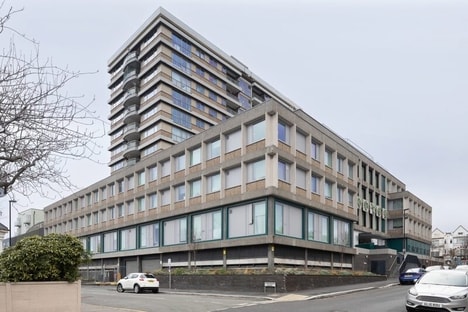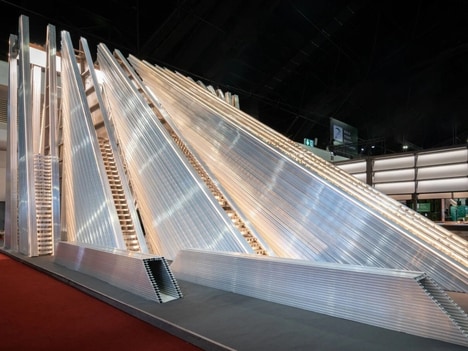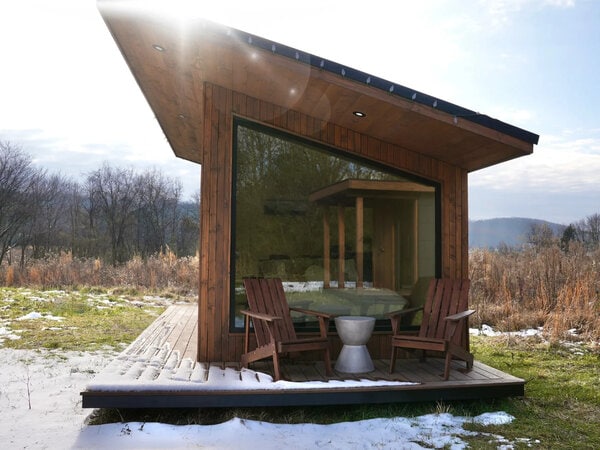
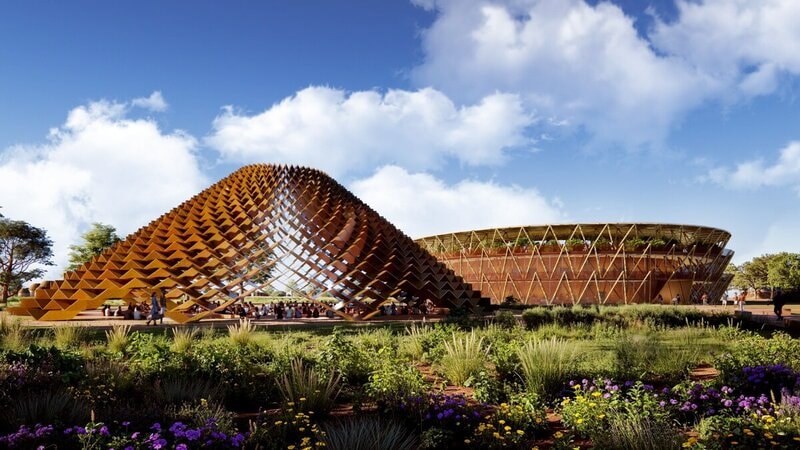
BIG is developing Refugee Cities as a decade-long plan for refugees that pairs legal permits with a self-sustaining modular urban layout financed by institutional investors rather than short-term aid. The project responds to a displacement outlook of 1.2 billion refugees by 2050 and starts with a single-family base unit built for longer stays, not emergency shelter.
The first prototype is set for the Bidi Bidi Performing Arts Centre in Uganda. Its layout groups homes into neighborhoods and then districts, with shared assets such as a food market and co-working space, while separate Opportunity Zones for farming and manufacturing are intended to generate returns over decades.
Institutional financing and host-nation work rights turn refugee housing into an infrastructure pitch for governments and investors, not just donors. A modular plan built around family units and on-site production moves long-stay settlements closer to economic hubs that can support jobs alongside shelter.
Image Credit: to.org
What's Driving This Trend
- Modular Refugee Urbanism
- Prefabricated family-based districts signal a shift from temporary camps to scalable urban systems that combine shelter, services, and long-term community formation.
- Investor-financed Humanitarian Infrastructure
- Institutional capital introduces new models for displacement response by treating refugee settlements as investable assets with measurable social and economic returns.
- Self-sustaining Settlement Economies
- Integrated farming, manufacturing, markets, and co-working spaces create pathways for refugee communities to function as productive local economies rather than aid-dependent enclaves.
Who This Affects Most
- Affordable Housing
- Long-duration modular homes create opportunities for housing providers to adapt durable, low-cost construction systems for displaced and underserved populations.
- Impact Investing
- Refugee infrastructure opens a market for blended finance vehicles that connect humanitarian outcomes with long-term, revenue-generating development assets.
- Urban Planning
- District-scale layouts designed around work rights, shared amenities, and local production reshape how planners approach inclusive cities for rapidly displaced populations.