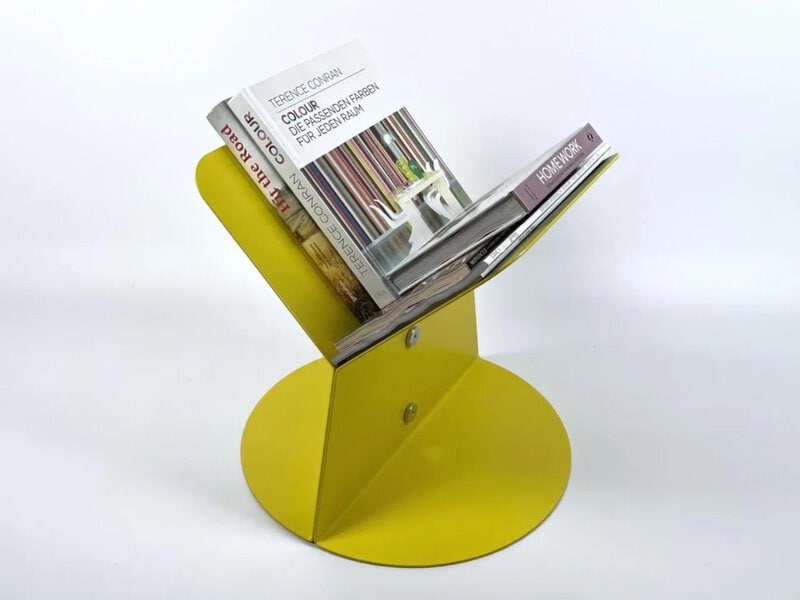
The Modular No. 2 by Michael Hilgers is a minimalist furniture design formed from two powder-coated steel components that can be reconfigured into multiple household furnishings. Joined together, the two halves create a compact side table with a clean geometric silhouette suitable for living rooms and bedrooms. Flipped over, the same construction transforms into a magazine rack or bookstand, using its integrated form to support books and periodicals without requiring additional hardware or accessories.
The multifunctional design also allows each steel section to be wall-mounted independently as floating bedside tables using the same openings that connect the two halves. Beyond the bedroom, the components can be installed as entryway consoles, decorative wall shelves, or desk extensions to provide additional surface space.
Image Credit: Michael Hilgers
What's Driving This Trend
- Reconfigurable Minimalism
- Compact furnishings with multiple orientations reflect rising demand for objects that shift roles in small homes without visual clutter.
- Hardware-free Adaptability
- Integrated connection points and structural forms suggest new possibilities for modular products that reduce parts, assembly complexity, and accessory dependence.
- Wall-mounted Flex Spaces
- Furniture that transitions from floor use to vertical installation opens opportunities in adaptable interiors where surfaces can be added without permanent built-ins.
Who This Affects Most
- Home Furniture
- Multifunctional steel designs indicate a market for durable, space-saving pieces that serve several household needs through simple reconfiguration.
- Interior Design
- Minimal modular components create new flexibility for designers seeking customizable layouts in bedrooms, entryways, and compact living environments.
- Metal Fabrication
- Powder-coated steel furniture highlights potential for precision-formed components that combine durability, aesthetics, and modular performance in consumer goods.