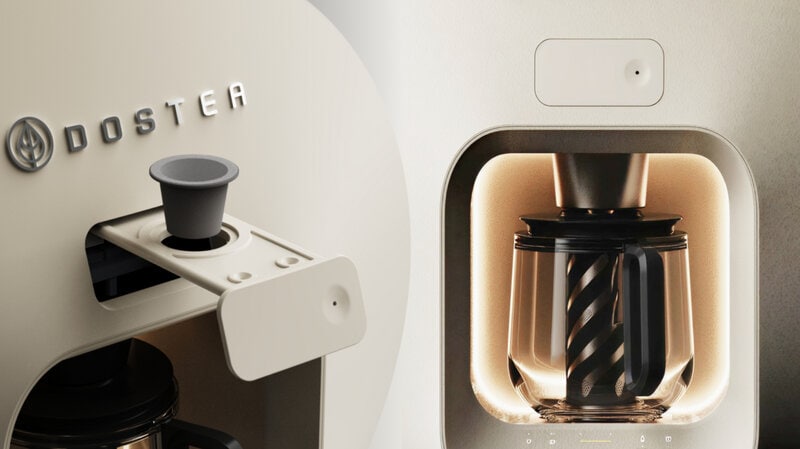
The Dostea is a compact countertop appliance developed to automate traditional chai preparation while preserving the brewing process. Designed by Analogy Design for a UK startup, the machine allows users to prepare loose-leaf chai with milk and spices through a one-touch interface while maintaining control over brewing strength, milk ratio, and flavor preferences. Created from concept through product development and manufacturing planning, the appliance combines a minimal form with design influences drawn from Indian craft traditions and contemporary European aesthetics.
It is engineered with a compact internal mechanism; the chai maker was developed to reduce complexity without compromising customization or countertop appeal. Analogy Design optimized the product's structure to minimize its component count while refining the appliance for manufacturing readiness. The result is a kitchen appliance that modernizes a time-intensive tea-making ritual.
Image Credit: Analogy Design
Key Themes Behind This Trend
- Automated Cultural Brewing
- Countertop devices that replicate traditional beverage rituals create room for premium appliances that balance convenience, authenticity, and sensory customization.
- Customizable One-touch Appliances
- Personalized strength, milk, and spice controls reflect a growing market for simplified interfaces that still preserve individual taste preferences.
- Compact Ritual Technology
- Space-saving kitchen products inspired by heritage practices open new possibilities for urban consumers seeking meaningful daily routines without manual preparation time.
Where This Applies
- Small Kitchen Appliances
- Manufacturers can differentiate through culturally specific automated devices that expand beyond coffee into traditional tea and specialty drink preparation.
- Premium Beverage Technology
- Connected and customizable brewing systems are reshaping at-home consumption by bringing café-style precision to culturally rooted drinks.
- Industrial Design
- Blending regional craft cues with minimalist product architecture signals demand for appliances that carry both functional efficiency and emotional design value.