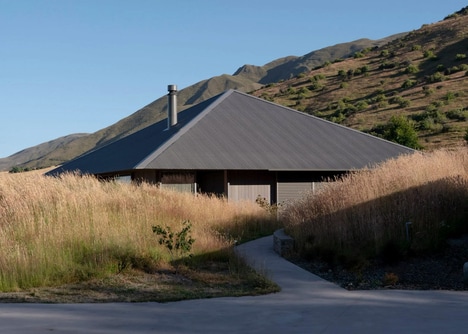
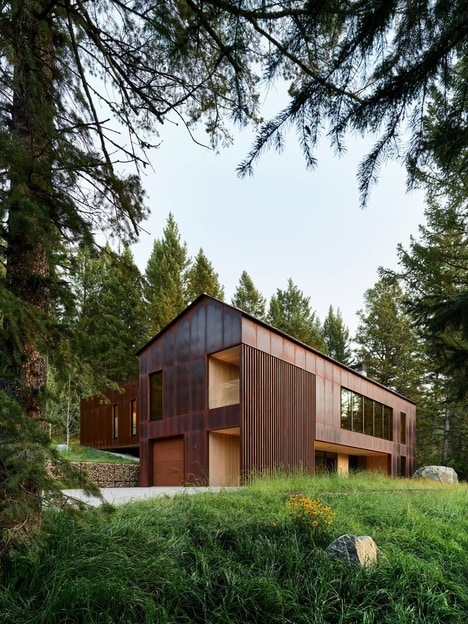
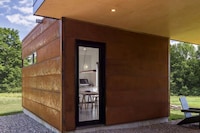
A striking contemporary mixed-material house creates an eye-catching accent in the English county of Norfolk. Amid the lush greenery of the rural valley, a structural facade, incorporating Corten steel, glass, and flint (a type of compact crystalline silica found in chalk or limestone), creates a modern intervention. This mixed-material house, formally named Coast House, was designed by UK studio Hudson Architects in the place of a 1920s structure.
The architects separated the house into three volumes—one section boasts floor-to-ceiling windows in order to maximize views of the outdoors. This central see-through pavilion is "flanked by a wing clad in flint and a wing wrapped in Corten steel." The latter material—both cost-effective and easy to care for—has certainly been a popular structural insertion for contemporary architects in recent years.
Image Credit: Joakim Boren
Key Themes Behind This Trend
- Mixed-material Architecture
- Designing buildings with contrasting materials creates visually striking and modern additions to traditional landscapes.
- Sustainable Building
- The use of cost-effective and easy-to-care-for materials provides opportunities for more eco-friendly and accessible construction.
- Maximizing Nature Views
- Design features such as floor-to-ceiling windows help to bring the natural surroundings into interior spaces and offer a unique living experience.
Where This Applies
- Architecture and Design
- Incorporating multiple materials into building designs offers architects the chance to create unique and modern structures.
- Construction and Building Materials
- Using sustainable and cost-effective materials can lead to more eco-friendly building solutions that are accessible to a wider range of people.
- Real Estate and Property Development
- Design features such as maximizing views and creating modern structures can increase property values and provide unique living experiences to potential buyers.