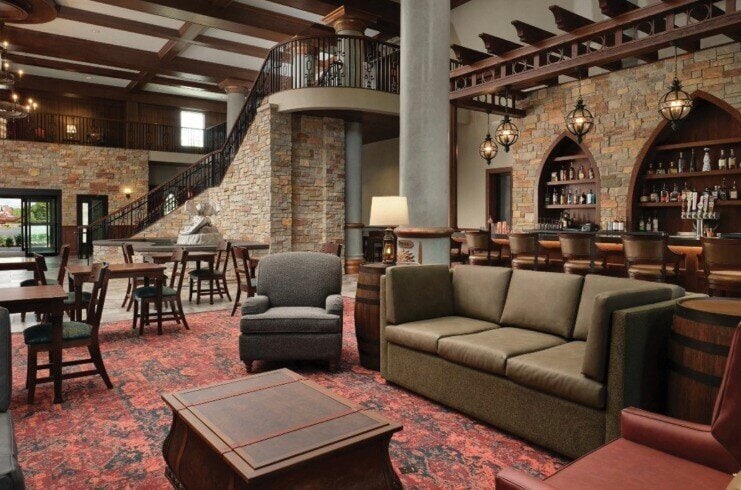
Dellshire Resort introduced a medieval-inspired lobby in Wisconsin Dells, Wisconsin, giving the new building a fantasy-forward first impression. The 208-room property was designed by Architectural Design Consultants, Inc. (ADCI), and the entry space sets the tone with an Old World feel.
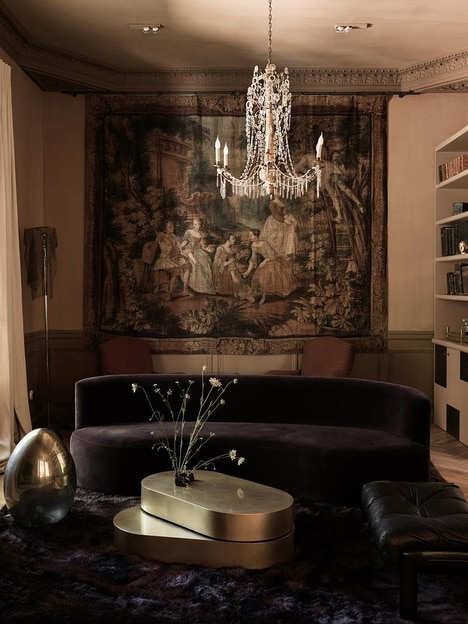
Warm stone, woodwork, leather furniture, and richly toned finishes give the lobby its castle-like mood without making it feel stiff. A dragon statue in the pond, chandeliers, and carefully hidden venting help the room feel immersive rather than theme-park obvious, which is exactly what makes the space work as hospitality design.
For travelers, this means the lobby becomes part of the stay, not just a pass-through on the way to the room. For resorts, it raises expectations for arrival spaces that tell a clear story and carry that mood into dining and common areas.
Image Credit: LODGING Magazine
Why This Trend Is Growing
- Immersive Lobby Design
- Hospitality brands are transforming arrival spaces into narrative-rich environments that deepen guest engagement before check-in is complete.
- Fantasy-inspired Hospitality
- Themed architectural details rooted in medieval, mythic, or storybook aesthetics create differentiated stays that feel memorable without relying on overt entertainment cues.
- Experiential Arrival Spaces
- Resort lobbies are evolving from transitional zones into signature brand moments that influence perceived value across dining, lounging, and social areas.
Industries Being Reshaped
- Hospitality
- Hotels and resorts can use immersive interior concepts to distinguish properties in crowded leisure destinations and extend the guest experience beyond guestrooms.
- Interior Design
- Design firms are finding new relevance in blending theatrical atmosphere with premium materials, hidden infrastructure, and functional comfort.
- Tourism
- Destination markets benefit when accommodations add photogenic, story-driven spaces that encourage longer stays, social sharing, and stronger visitor recall.