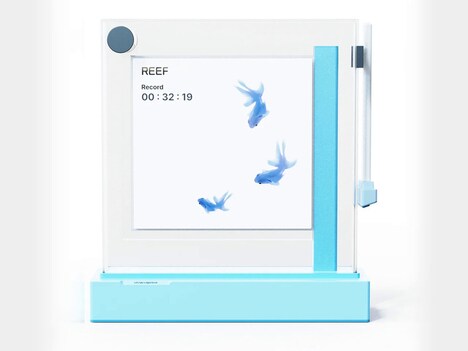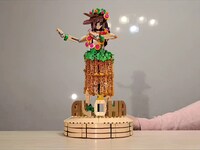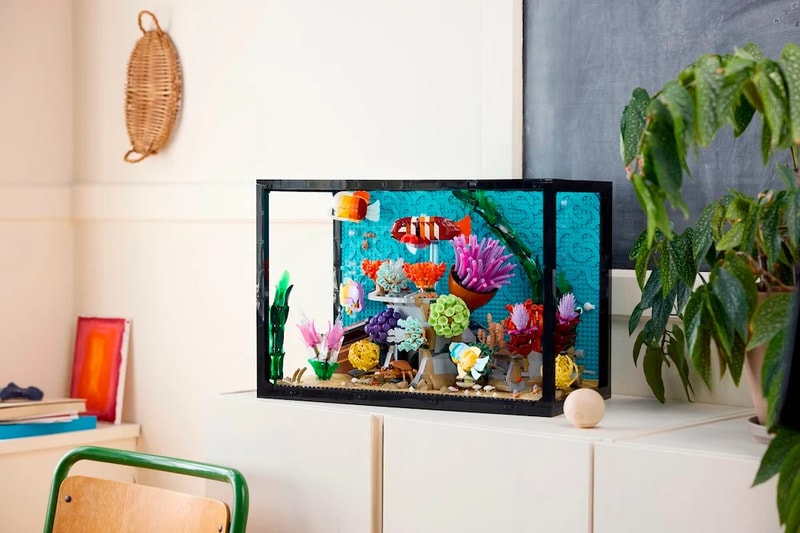
The LEGO Tropical Aquarium uses 4,154 pieces to construct a dynamic reef scene that springs to life through mechanical activation. A hand crank powers motion—a gentle wave of seaweed, fish movement, and shifting light reflections—creating the sense of a breathing underwater ecosystem. The build intersperses clear and colored elements to capture the translucency and texture of coral, water, and marine life.
The designers compose depth through layering and scale; they do so by placing smaller fauna behind larger forms to evoke spatial richness. The color contrast highlights fish silhouettes while preserving a harmonious palette that suggests sunlight filtering through water. By integrating mechanical motion into a static medium, the LEGO Tropical Aquarium becomes not just a model but a micro-experience that invites curiosity and slow observation.
Image Credit: LEGO
What Makes This Trend Stand Out
- Interactive Construction Kits
- The fusion of mechanical components with traditional building kits offers an engaging user experience that emulates real-world environments.
- Dynamic Model Displays
- Models that incorporate movement and light provide an immersive way to experience static designs, transforming them into captivating interactive exhibits.
- Layered Color Techniques
- Using varied colors and clear elements to create depth and realistic visuals in models opens up new possibilities for lifelike recreations.
Sectors Adopting This
- Toy Manufacturing
- Integrating motion and interactive features into construction toys can redefine user engagement and educational value.
- Museum Exhibits
- Dynamic, motion-infused displays can enhance educational exhibits by drawing viewers into lifelike, interactive representations.
- Interior Design
- Incorporating kinetic elements into decorative models or displays can create lively and attention-grabbing focal points in interior spaces.