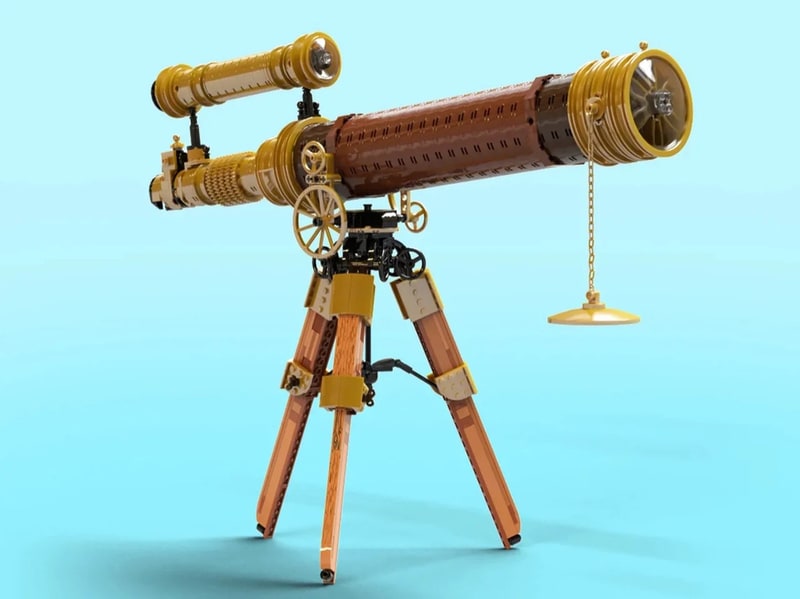
Functional Vintage Telescope is a LEGO Ideas submission by Bricked1980, designed as a detailed brick-built interpretation of a Victorian-era refractor telescope. The model uses roughly 600 pieces and measures about 40 centimeters tall and 53 centimeters long, mounted on a fully adjustable tripod with rotating and pivoting mechanics. Its construction includes reddish-brown elements and pearl gold accents that replicate the look of antique brass instruments, along with details such as adjustment wheels and a secondary spotting scope.
The build incorporates four interchangeable scene discs placed behind the objective lens, including a spaceship, tropical island, crescent moon, and pirate ship. A hidden light brick inside the barrel illuminates these scenes when activated, allowing them to be viewed through the eyepiece. The project has been selected as a LEGO Ideas Staff Pick and is progressing toward the 10,000-supporter threshold required for official review.
Image Credit: Bricked1980
What's Driving This Trend
- Heritage-modern Hybrid Designs
- Aesthetic cues from historical instruments combined with contemporary mechanics point to products that evoke nostalgia while delivering modern functionality.
- Interactive Miniature Storytelling
- Interchangeable scene discs and internal illumination create compact narrative experiences that transform single objects into multiple themed dioramas.
- Modular Mechanical Playcraft
- Adjustable tripods, rotating mounts, and swap‑out components indicate a move toward tactile, reconfigurable builds that blend play with precision engineering.
Who This Affects Most
- Consumer Toys and Collectibles
- Adult-oriented, detailed brick models suggest a premium collector market for functional display pieces that bridge hobbyism and high-end decor.
- Home Decor and Lifestyle
- Decorative objects with integrated mechanical or lighting features offer opportunities for multifunctional accents that serve both aesthetic and experiential roles.
- Educational Steam Kits
- Hands-on assemblies featuring optics, gearing, and modular scenes could serve as platforms for experiential learning in physics and design thinking.