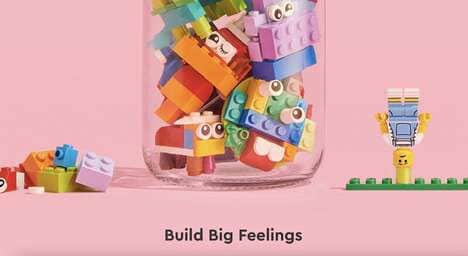

The LEGO Imagine ad campaign shows that children and adults don't necessarily have to build something to enjoy the boundless amounts of creativity this toy offers. In this case, it takes individual building blocks and places them in typical animal homes such as a bird cage, fish tank and lily pad. By surrounding them with such illustrations, people can immediately imagine the pieces as animals.
Conceived and executed by BRAD, an ad agency based in Montreal, Canada, the LEGO Imagine ad campaign also encourages people to build things that aren't necessarily inanimate structures, which are easy to fall back on. Art directed by Julien de Preux with creative direction by Carle Coppens, the print ads are pretty open-ended, allowing them to be interpreted however someone wishes.
What's Driving This Trend
- Creative Advertising Campaigns
- Disruptive innovation opportunity: Exploring unconventional ways to showcase products or services through imaginative and creative advertisements.
- Animal-inspired Marketing
- Disruptive innovation opportunity: Incorporating animal themes and symbolism in marketing campaigns to create a more relatable and engaging experience for consumers.
- Open-ended Branding
- Disruptive innovation opportunity: Allowing consumers to interpret and interact with a brand's messaging in their own unique way, fostering creativity and personalization.
Who This Affects Most
- Advertising and Marketing
- Disruptive innovation opportunity: Utilizing innovative and unconventional advertising strategies to capture the attention of consumers and stand out in a crowded market.
- Toy Manufacturing
- Disruptive innovation opportunity: Incorporating animal-themed building blocks and playsets to enhance imaginative play and exploration for children.
- Creative Design and Art
- Disruptive innovation opportunity: Collaborating with artists and designers to create visually captivating and open-ended campaigns that evoke emotions and spark creativity.