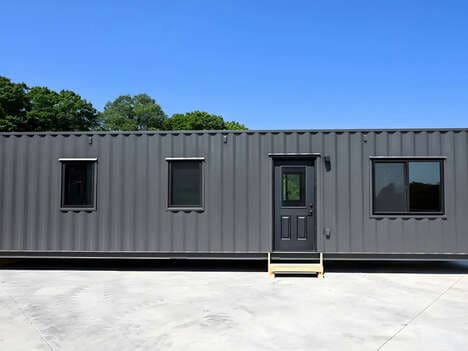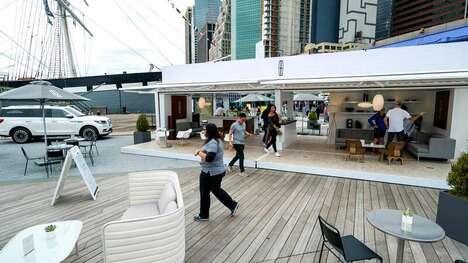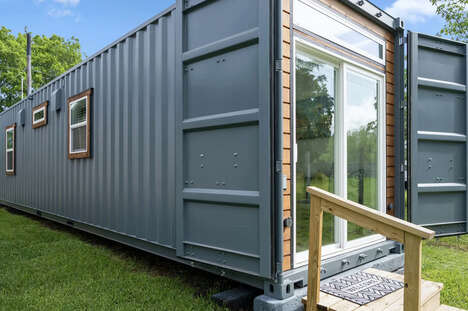
Poland-based designer Adam Wiercinski of Architektthis created the city-mimicking village of kontenerART. The idea for this unique space was to create a gathering ground for artists.
The entire space is designed for meeting new people and interacting in a relaxed environment with like-mined individuals. In order to make kontenerART into a usable space, the designer used shipping containers to create different sections. For example, one shipping container is used as a Bacardi bar, while another is used as a music workshop.
The waterfront village is another example of how shipping containers are a useful architectural material. The idea to create a communal environment meant that this village would use the shipping containers as a perimeter to enclose a central gathering space. Using an open-concept design for the containers, it creates a paralleled open-minded space.
Key Themes Behind This Trend
- Shipping Container Architecture
- The use of shipping containers as building materials and unique design elements in architecture and urban planning.
- Communal Workspaces
- The rise of communal workspaces for artists, entrepreneurs, and other like-minded individuals to foster creativity and collaboration.
- Open-concept Design
- The use of open-concept design in architecture to create welcoming and inclusive spaces.
Where This Applies
- Architecture and Design
- The architecture and design industry has the opportunity to utilize shipping containers as sustainable, functional, and cost-effective building materials.
- Hospitality and Events
- The hospitality and event industry can utilize shipping container structures to create unique and memorable experiences and event spaces.
- Co-working and Co-living
- The co-working and co-living industry can expand their offerings by incorporating communal and sustainable shipping container structures for their members.