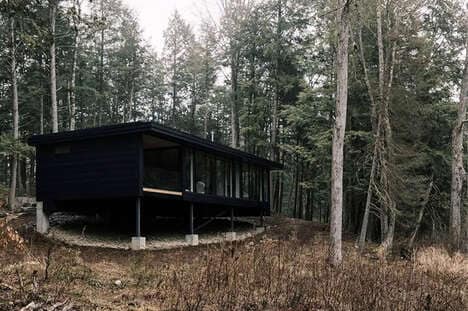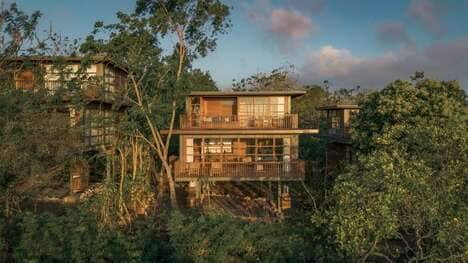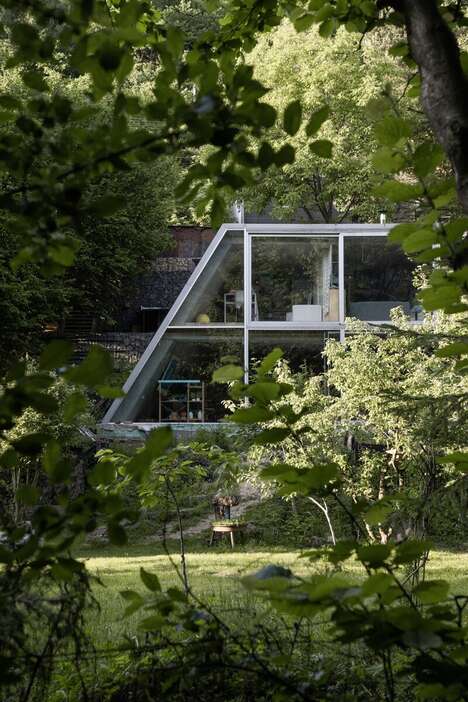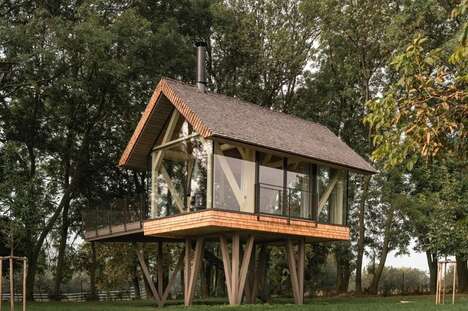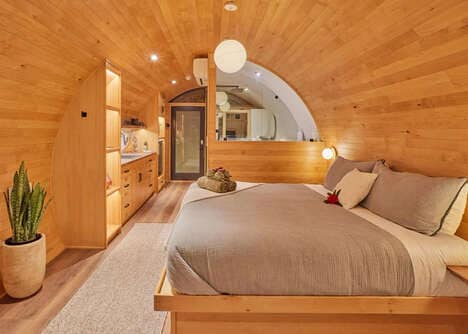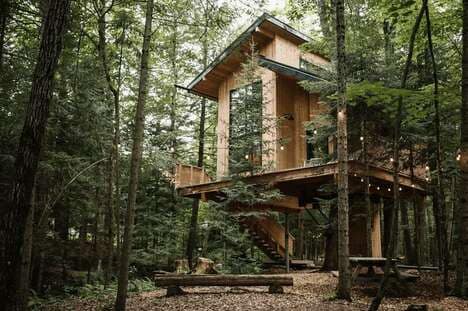
The KOJA Treehouse is a conceptual architecture design intended to help inhabitants escape the hustle and bustle of city life in favor of a more tranquil space in the wilderness. The treehouse features a symmetrically designed construction that would wrap around the trunk of a tree high above the forest floor and only be accessible via ladder. The interior would provide just enough space for eating, sleeping and relaxing thanks to a series of shapeshifting components.
The KOJA Treehouse is the design work of Kristian Talvitie for the Polestar Design Contest and focuses on sustainability with a construction that would be 100% self-sufficient. This is thanks to a series of components that would harness the power of the sun, wind and rain.
Key Themes Behind This Trend
- Sustainable Treehouse Living
- Opportunity for companies to create innovative, self-sustaining and eco-friendly treehouses for city dwellers seeking a retreat in the wilderness.
- Shapeshifting Architecture
- Opportunity for architects and designers to create flexible living spaces with components that can be reconfigured for various purposes within the limited space of a treehouse.
- Off-grid Living Spaces
- Opportunity for companies to develop technology for self-contained living spaces such as the KOJA Treehouse that harnesses renewable energy sources available in the wilderness.
Where This Applies
- Architecture
- Architects can embrace sustainability and innovation to design efficient living spaces that blend seamlessly with nature.
- Renewable Energy
- The growing trend of sustainable and off-grid living presents opportunities for the development of renewable energy technology suited for small living spaces, such as the KOJA Treehouse.
- Tourism
- Tourism companies can capitalize on the trend of eco-friendly travel and offer unique treehouse experiences that allow guests to escape and connect with nature.