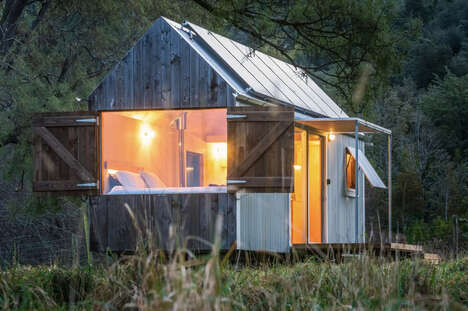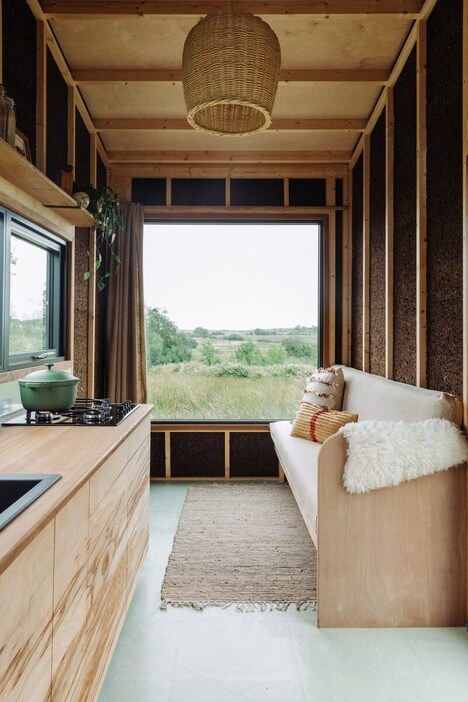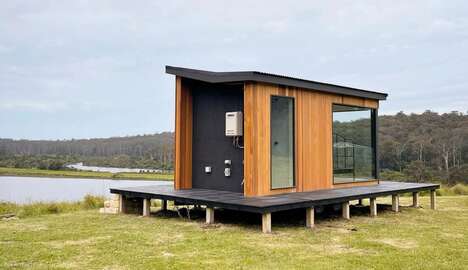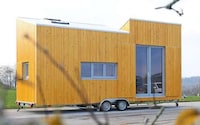


The 'Kirimoko' tiny house has been designed by the Condon Scott Architects in Wanaka, New Zealand as a stylishly efficient living space for the clients. The home is constructed using the Passive House construction method and is thus ultra-efficient when it comes to keeping inhabitants comfortable amidst the Central Otago environment that can be quite unforgiving. The home is thus achieved using a series of structural insulated panels for both the roof and walls, which deliver an exceptionally airtight level of insulation without the need for any thermal bridging where a lot of heat transfer and energy loss can occur.
The 'Kirimoko' tiny house is efficient, but still manages to have floor-to-ceiling windows in the front to maximize the amount of natural light that pours in during the daylight hours.
What Makes This Trend Stand Out
- Passive House Construction
- Explore the growing trend of constructing energy-efficient buildings using the Passive House method.
- Structural Insulated Panels
- Discover the increasing use of structural insulated panels for their airtight insulation properties in building construction.
- Maximizing Natural Light
- Learn about the emphasis on incorporating floor-to-ceiling windows to optimize the benefits of natural light in building design.
Sectors Adopting This
- Green Building
- Discover opportunities for innovation in the green building industry by designing and constructing energy-efficient homes.
- Sustainable Architecture
- Identify potential disruptive innovation opportunities in the field of sustainable architecture by adopting the Passive House construction method.
- Window Manufacturing
- Exploit the increasing demand for energy-efficient buildings by developing and manufacturing high-quality, floor-to-ceiling window systems.