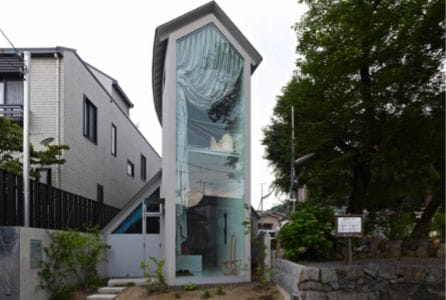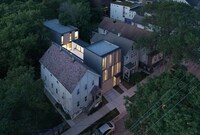
The Keret House by Jakub Szczesny is a marvel as it measures a restrictive 48 inches at its widest point.
This residence boasts a triangular shape and is located in a tiny crevice between two buildings that tower over the Polish city of Warsaw. Keret House was designed by Szczesny to shelter a single inhabitant temporarily as the living conditions of the space make it unbearable for extended periods of time. “It requires a sense of humor, as you cannot stay long in a place like this” says the architect of the sliver of space.
Despite its small measures, this construction is highly attention-grabbing with its statement on urbane infrastructure. The Keret House by Jakub Szczesny is meant to be a reflection of Warsaw’s metropolis and its complexity in architecture and history.
Key Themes Behind This Trend
- Micro Housing Trend
- The Keret House showcases the potential for micro-housing that caters to the growing demand for affordable living spaces in urban areas.
- Innovative Architecture Trend
- Jakub Szczesny's design for the Keret House illustrates the potential for innovative architecture to redefine urban living spaces and infrastructure.
- Temporary Living Spaces Trend
- The Keret House highlights the market for temporary living spaces that are compact, minimalist, and portable for those seeking a transient and minimalist lifestyle.
Where This Applies
- Real Estate Industry
- The real estate industry can explore micro-housing solutions like the Keret House that cater to the increasing demand for affordable living spaces in densely populated urban areas.
- Architecture and Design Industry
- The Keret House exemplifies the potential for innovative architectural designs that can adapt to small or unconventional spaces and redefine the urban living landscape.
- Construction Industry
- The construction industry can explore new building materials, techniques, and methods to build compact and efficient living spaces like the Keret House that are sustainable, functional, and aesthetically pleasing.