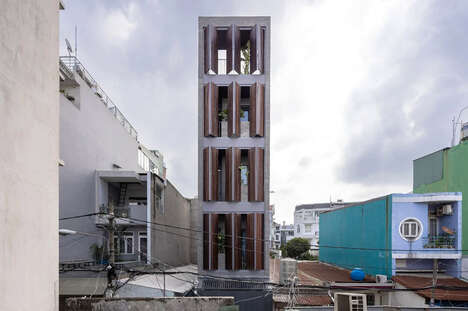
Sahabet Selojene crates the Piturooms, which is a skinny hotel located in Indonesia with a width of only 280 cm. It is a design solution to the busy inner-city space, found right in Central Java along a narrow site resting within an alleyway, a nearby garden, and the homes that surround the hotel.
The lack of space became the main highlight as it took the small plot and transformed it into a thin hotel. The interior has space for seven hotel rooms, a small lounge area, and an entrance lobby. Additionally, it also has a small outdoor terrace area found at the top of the hotel. The main focal point of the Piturooms is the staircase with a crisscross function.
Image Credit: Sahabet Selojene
What's Driving This Trend
- Skinny Hotels
- The design of the Piturooms showcases a thin structure, addressing the lack of space in busy inner-city areas.
- Space-optimizing Design
- Sahabet Selojene has created a design solution to maximize space in narrow sites, such as the Piturooms in Central Java.
- Innovative Hotel Concepts
- The Piturooms represents an innovative approach to hotel design, with its unique features and utilization of limited space.
Who This Affects Most
- Hospitality and Tourism
- The hospitality industry can explore the concept of skinny hotels to make efficient use of limited spaces and provide unique experiences to guests.
- Architecture and Design
- Design professionals in the architecture industry can study the space-optimizing techniques used by Sahabet Selojene to create innovative and functional structures like the Piturooms.
- Real Estate Development
- Real estate developers can capitalize on the trend of thin-structured hotels to maximize land utilization and cater to the growing demand for accommodations in urban areas.