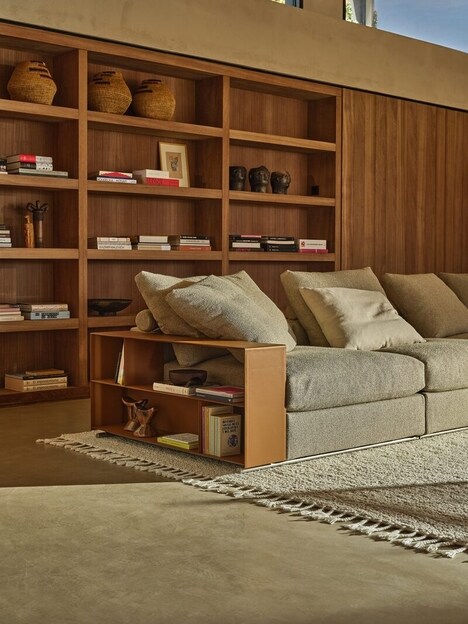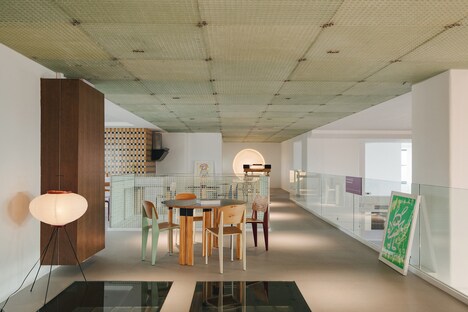
The Japanese office furniture brand NII presented its first exhibition outside Japan at Salone del Mobile.Milano 2026 and the company shed light on the versatile yet aesthetically driven PARLAMENTO modular system, designed by Jun Aizaki of CRÈME, as well as other projects from AMDL CIRCLE, Todd Bracher, and Rodolfo Agrella.
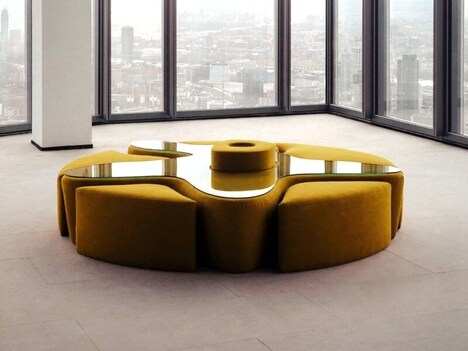
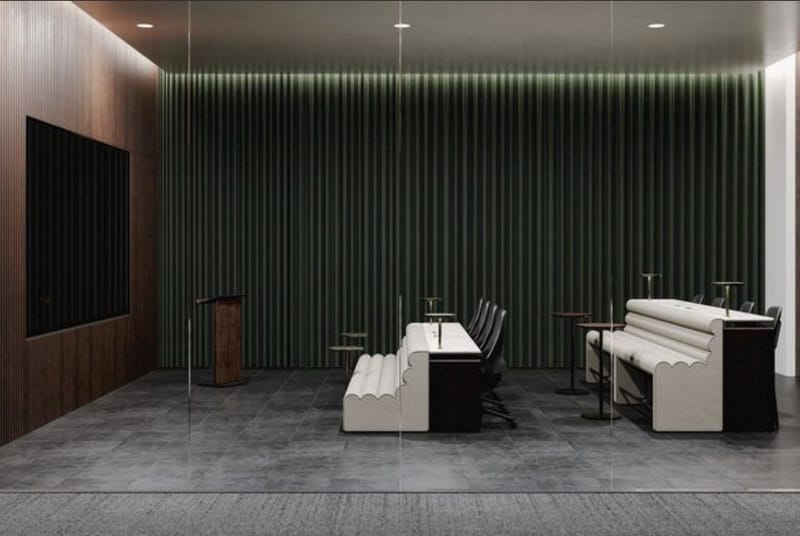
This piece consists of four unit heights that generate configurations encouraging interaction among multiple users. Sofas and tables are available in both low and high versions. These furniture silhouettes feature flowing curvilinear forms that evoke water ripples and organic morphologies.
The PARLAMENTO modular system by Jun Aizaki is designed so that elements facilitate information exchange from any position and in every direction. This sensibility creates spatial continuity suitable for meeting rooms, reception areas, and shared hospitality environments.
Image Credit: NII
Why This Trend Is Growing
- Modular Collaborative Seating
- Flexible modules that assemble into multi-user formations create opportunities for reconfigurable workplace ecosystems that support dynamic team workflows and ad hoc meetings.
- Biophilic Curvilinear Design
- Organic, ripple-inspired silhouettes introduce material and form innovations that shift focus toward tactile, nature-referencing aesthetics in commercial interiors.
- Height-differentiated Interaction
- Varied unit heights enabling eye-level variation and multiple postures suggest new spatial grammars that recalibrate how occupants exchange information across settings.
Industries Being Reshaped
- Office Furniture
- The rise of versatile systems foregrounds product platforms that combine aesthetic cohesion with configurable ergonomics for evolving hybrid work demands.
- Workplace Design and Architecture
- Design practices that integrate continuous spatial flows and multi-directional sightlines point to novel spatial planning models emphasizing informal exchange and visual connectivity.
- Hospitality and Shared Spaces
- Reception and lounge environments that prioritize social permeability and adaptable seating arrangements indicate service models centered on transient collaboration and guest interaction.