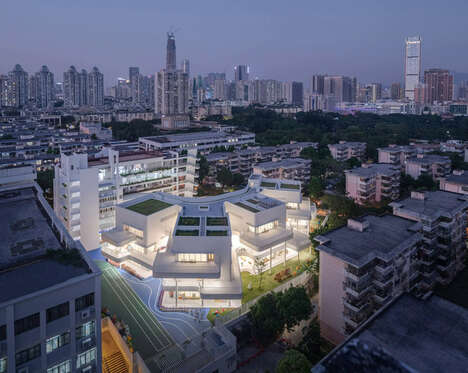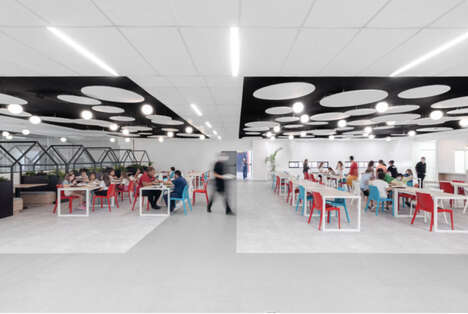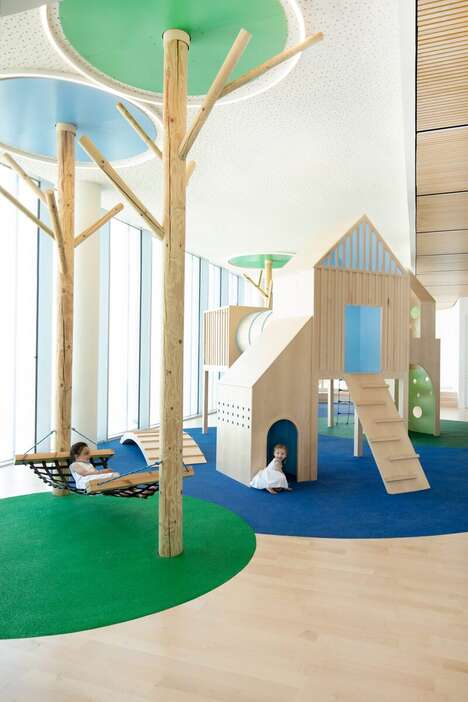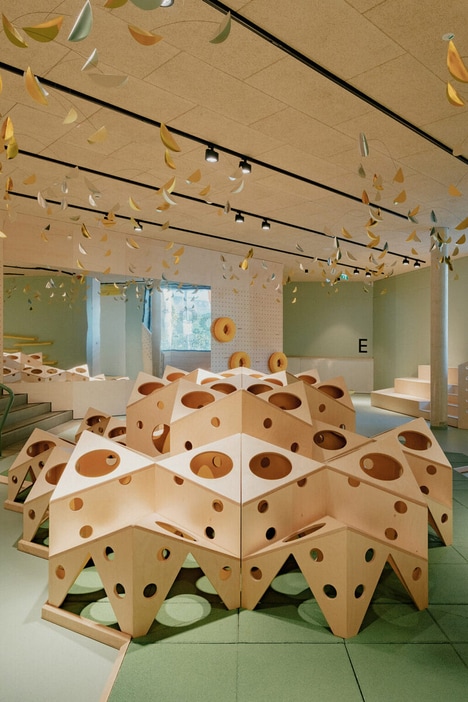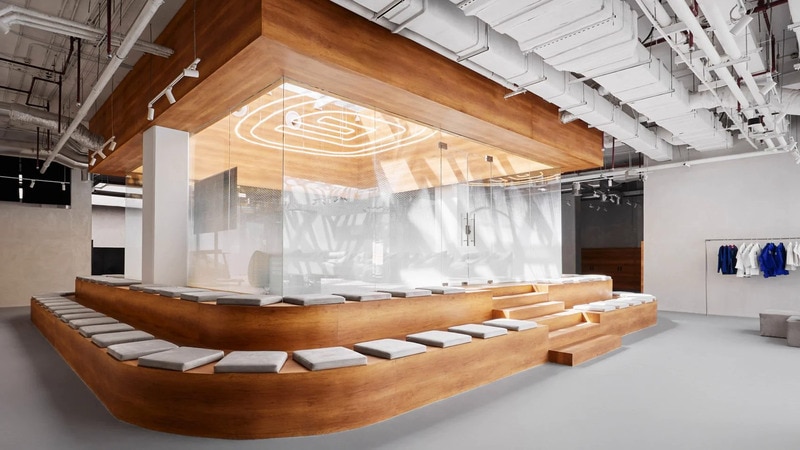
Architecture firm Kidz designed a Jiu-Jitsu gym that is meant for children to easily navigate around. The space is modeled on a boxing ring with a wooden amphitheater as the center space. The sports club is the newest of a range of venues across the Middle East and is meant to teach children Brazilian martial arts.
The project architect, Ruben Movsisian shares more on the design, "The idea is that children shouldn't get distracted by anything and at the same time they need to understand the space easily. Big blocks and big ideas – everything was created for children's perception of the world. [...] Children can visually explore and understand how various systems function, a principle commonly applied in school and kindergarten design both locally and internationally."
Image Credit: Ruben Movisisian
What's Driving This Trend
- Child-centric Design
- Creating environments tailored to children's perceptions introduces new opportunities for inclusive and engaging spaces in various sectors.
- Interactive Learning Spaces
- Integrating educational elements into recreational environments fosters an innovative approach to hands-on learning experiences.
- Martial Arts Education for Kids
- Expanding martial arts programs specifically designed for children opens avenues for new teaching methodologies and fitness-related products.
Who This Affects Most
- Child-friendly Architecture
- The focus on designing spaces that accommodate and engage children represents a shift towards more inclusive and adaptable architecture.
- Sports and Recreation
- Developing sports facilities that cater specifically to children offers growth potential in the niche of youth-centric sports programs.
- Educational Facilities
- Designing educational environments that double as recreational spaces presents a unique opportunity to merge physical activity with learning.