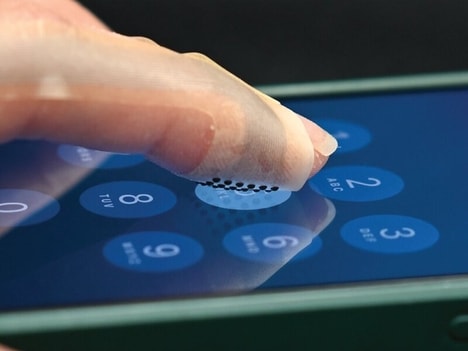
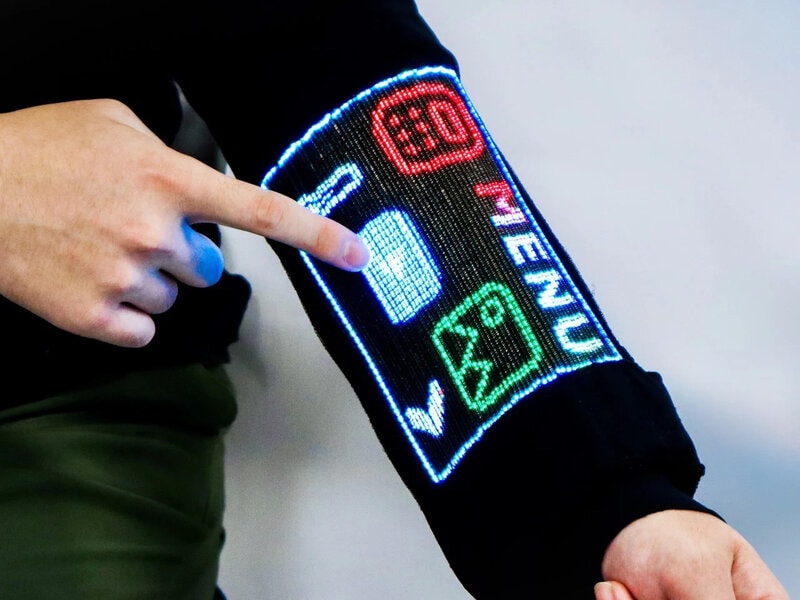
NUS researchers turned a sleeve into a working touchscreen by weaving electronic fibers into the fabric, so the garment can show images and react to presses while staying flexible around the forearm. The prototype replaces a rigid panel with touch sensing built into the thread itself.
Each fiber is about 0.04 inches thick and includes LEDs plus a touch layer beneath them. The sleeve uses 54 fibers to form a 96-by-54-pixel display, enough for large icons and simple tools rather than tiny menus.
Motion and temperature sensors let the interface rotate with the arm and adjust brightness automatically, while Bluetooth moves images to the sleeve. Video runs at 30 frames per second, or 25 with synchronized audio, which keeps the system usable without pretending it can replace a phone. Clothing with built-in controls could make quick checks more practical in lab settings and beyond.
Image Credit: NUS Researchers
Why This Trend Is Growing
- Touchscreen Textiles
- Flexible displays woven directly into fabric create new possibilities for wearable interfaces that blend visual feedback, touch control, and everyday comfort.
- Sensor-adaptive Clothing
- Garments that respond to motion, temperature, and orientation introduce smarter apparel experiences for environments where hands-free or glanceable interaction is valuable.
- Fiber-based Electronics
- Electronic fibers with embedded LEDs and touch layers point to lighter, softer device formats that move beyond rigid screens and hardware panels.
Industries Being Reshaped
- Wearable Technology
- Integrated fabric controls expand the wearable market with apparel that functions as both clothing and interactive digital hardware.
- Healthcare and Labs
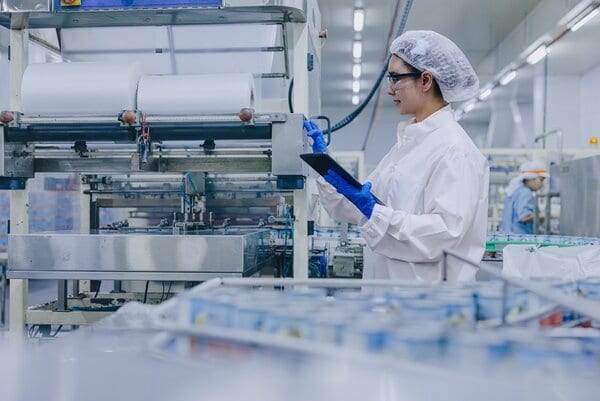
- Sleeve-based interfaces offer practical value in clinical, research, and sterile settings where quick information access must coexist with mobility and safety.
- Smart Apparel
- Textile manufacturers can explore connected garments that combine display, sensing, and communication features without sacrificing flexibility or fit.