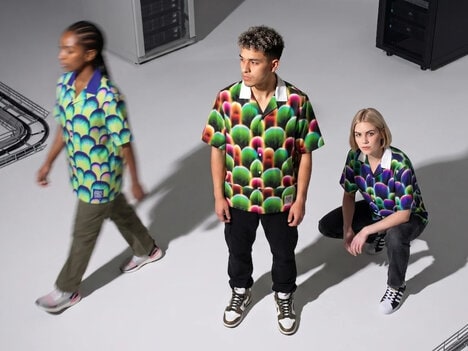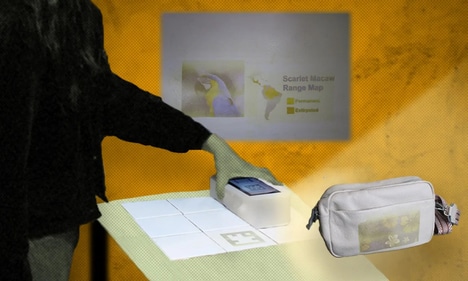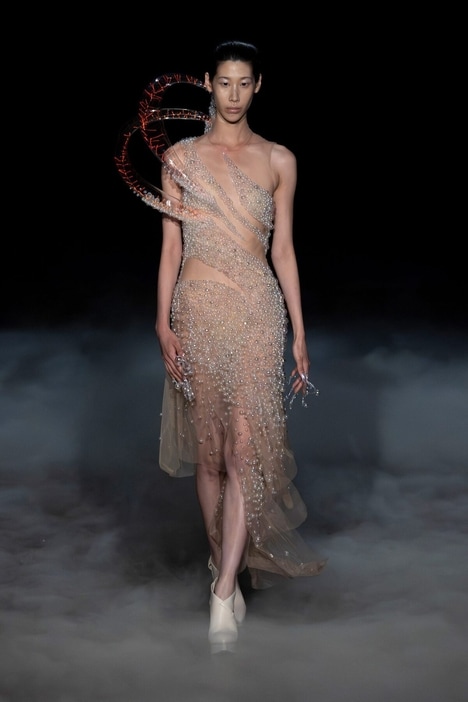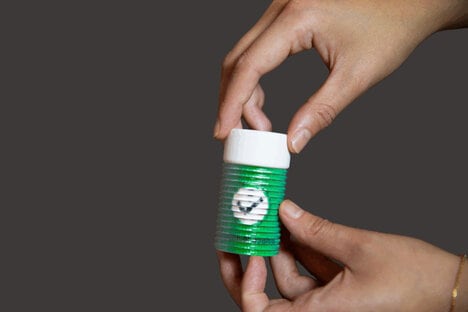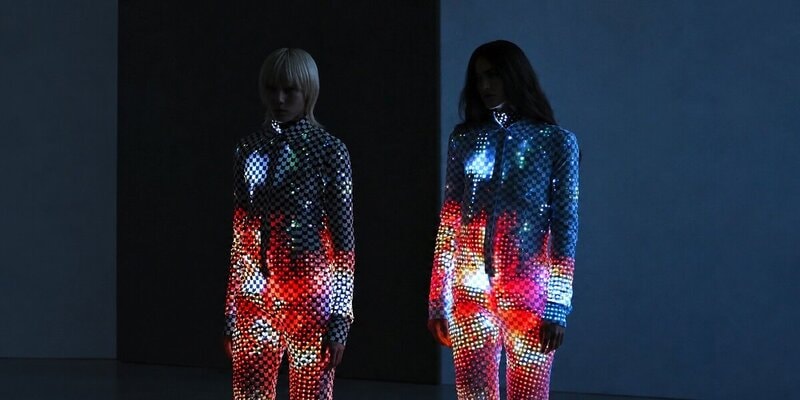
Anrealage's Skin collection lets a dress switch patterns without a costume change, turning clothing into a refreshable outer layer. Created by Kunihiko Morinaga, it uses e-ink, electronic paper that changes appearance without the glow of an LED screen.
A set of cocktail and evening dresses carry 1,000 to 2,000 electronic-paper scales, so color can move over the body and fade back to gray for another look. The collection also uses SEKISAI's Effective Skin, giving 3D-printed scales an angle-based shift that changes as the wearer moves. Motion becomes part of the styling, not just the runway walk.
For brands, this pushes fashion tech toward garments that act like programmable surfaces instead of fixed prints. In this convergence of fabric and hardware, surface design starts to compete with electronics as a core part of the product.
Image Credit: Anrealage's Skin, designboom, designboom
What Makes This Trend Stand Out
- Programmable Fashion Surfaces
- Garments with refreshable visual layers create opportunities for apparel brands to treat patterns, colors, and graphics as updateable digital assets rather than fixed design choices.
- E-ink Wearables
- Low-power electronic paper integrated into clothing introduces new possibilities for screenless personalization, adaptive styling, and subtle visual effects without the brightness of conventional displays.
- Motion-reactive Textiles
- Angle-shifting materials and 3D-printed scales expand fashion into kinetic visual experiences where movement becomes part of the product’s changing aesthetic.
Sectors Adopting This
- Fashion Technology
- The fusion of couture construction and embedded electronics signals a market for connected garments that blend luxury design with programmable functionality.
- Smart Textiles
- Advanced material systems using electronic paper and optical surface effects suggest new categories of fabrics that respond visually to context, motion, or user preference.
- Luxury Apparel
- High-end fashion houses can differentiate through transformable garments that reduce reliance on seasonal prints while increasing novelty and personalization.