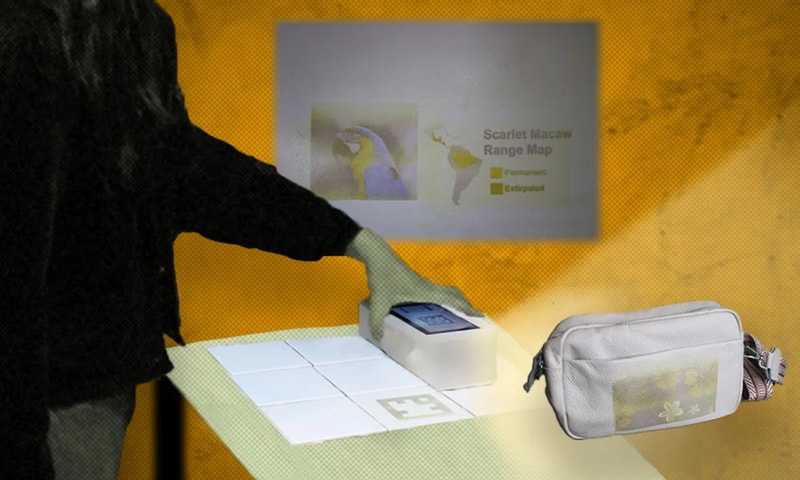
MIT researchers introduced ChromoLCD, a portable device that applies high-resolution designs to everyday objects using a blend of LCD mapping and LED illumination, featuring photochromic invisible ink activated by ultraviolet light. Developed at MIT CSAIL by Yunyi Zhu, Qingyuan Li and Stefanie Mueller, the gadget prints layered color by first mapping an image in monochrome then adding RGB detail, functioning like a handheld stamp for fabrics, furniture and boards.
ChromoLCD’s affordable components and simple workflow let users swap looks quickly without sewing or painting; researchers are testing scale-up ideas such as rollers and robot-mounted systems. As a consumer benefit, the system makes personalization instant and reversible, aligning with trends in on-demand customization and tangible digital-physical interaction while hinting at future AI-driven design-to-print pipelines.
Image Credit: MIT / CSAIL
What Makes This Trend Stand Out
- Rewritable Surface Customization
- Instant, reversible personalization of household and consumer goods that reduces reliance on permanent decorating and increases product lifespan.
- Photochromic Invisible Ink Printing
- High-resolution, UV-activated inks that enable discreet, on-demand color changes and multi-layered visual effects on diverse substrates.
- Portable Digital-to-physical Printing
- Handheld, map-driven devices that translate digital designs into tactile finishes, blurring lines between virtual design workflows and in-situ production.
Sectors Adopting This
- Home Furnishings
- Furniture and decor that support frequent aesthetic updates through rewritable surfaces, shifting value from permanent finishes to adaptable canvases.
- Fashion and Apparel
- Clothing and textile producers that could leverage temporary, high-resolution prints for on-demand customization and personalization without new garment inventories.
- Robotics and Manufacturing Automation
- Automation systems integrating rollers or robot-mounted applicators for scalable, non-destructive surface patterning across mass-production lines.