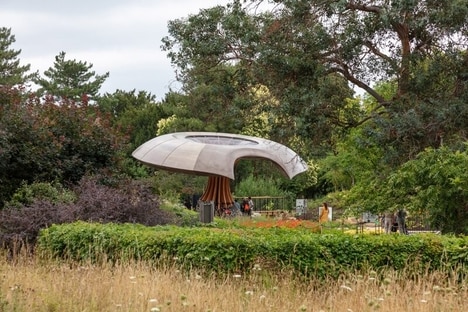
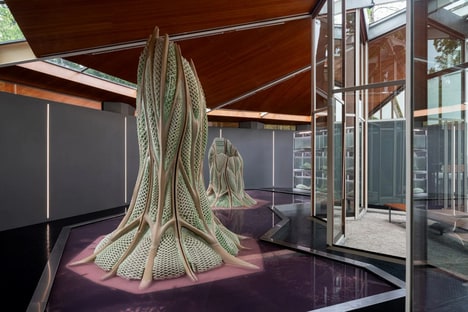
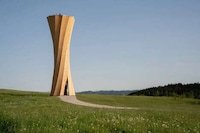
The ICD/ITKE Research Pavilion 2012 might look like it was spun by a spider, but it was actually built by a robot. An impressive feat, the public structure has an organic aesthetic that wouldn't necessarily by associated with such materials as carbon and glass fiber composites, which is what it's made out of.
A collaborative effort between students and researchers from the Institute for Computational Design (ICD) and the Institute of Building Structures and Structural Design (ITKE) at the University of Stuttgart, the ICD/ITKE Research Pavilion 2012 was inspired by arthropods’ exoskeleton. The high performance structure is incredibly thin with a shell thickness of just 4 millimeters. Spanning eight metres, it weighs less than 320 kilograms.
What's Driving This Trend
- Robotic Construction
- The use of robots in construction processes can create structures with unique and organic designs.
- Lightweight Materials
- The use of carbon and glass fiber composites allows for the creation of thin and lightweight structures.
- Bio-inspired Design
- Taking inspiration from nature, like insect exoskeletons, can result in innovative and aesthetically pleasing structures.
Who This Affects Most
- Architecture
- Architects can utilize robotic construction methods to push the boundaries of design and create visually striking buildings.
- Construction
- The construction industry can benefit from incorporating lightweight materials and robotic assistance to improve efficiency and reduce costs.
- Materials Science
- Researchers in materials science can explore the use of carbon and glass fiber composites to create stronger and lighter materials for various industries.