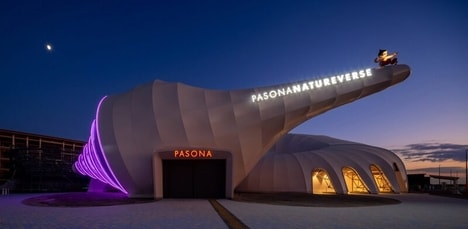
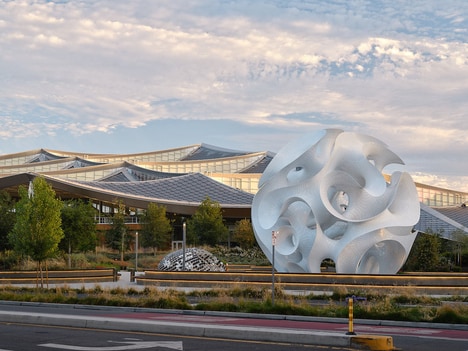
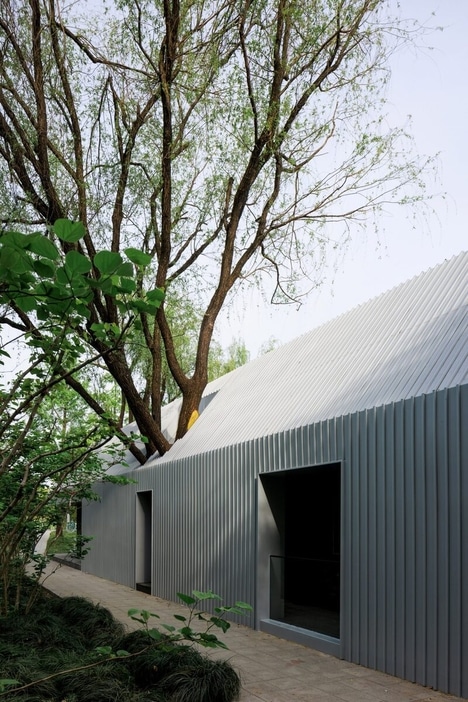
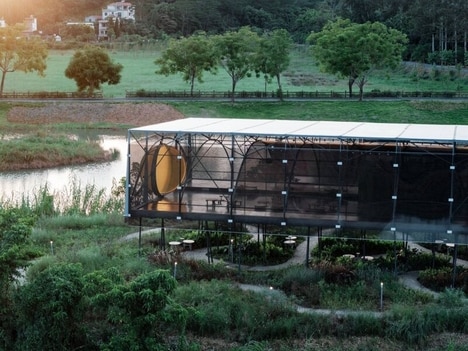
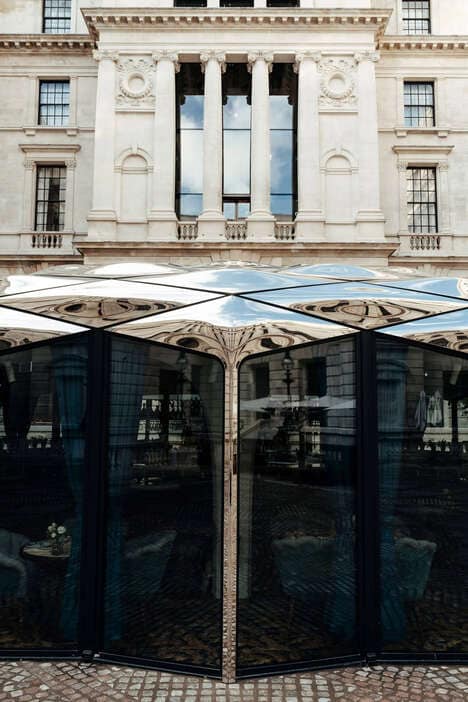
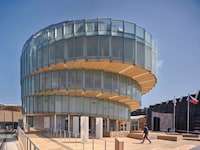
The Hyundai Pavilion is a stunning example of abstract architecture. Not only does it look like a work of art from the outside, the sculptural aspect of its design is continued on the inside as well. Inspired by waves, the facade of the Hyundai Pavilion dips and rises, but in more sharp geometric ways than fluid ones. Essentially, this design revolves around the notion of 'Motion Imagination.'
Designed by Unsangdong Architects, the Hyundai Pavilion was created as part of the 2012 Expo in Yeosu, South Korea. According to the architecture firm, "It actualizes the imagination and infinite possibilities of nature and urban." It also addresses the "constantly changing corporate brand image," a truth the auto company is embracing.
Key Themes Behind This Trend
- Abstract Architecture
- Disruptive innovation opportunity: Explore new forms and unconventional designs to create visually striking buildings that challenge traditional architectural norms.
- Motion-inspired Design
- Disruptive innovation opportunity: Integrate elements of motion and fluidity into various products and spaces to create unique sensory experiences for users.
- Brand Image Integration
- Disruptive innovation opportunity: Implement architecture and design elements that align with and reinforce a company's brand image to create a cohesive and immersive brand experience.
Where This Applies
- Architecture
- Disruptive innovation opportunity: Embrace innovative concepts and materials to push the boundaries of architectural design and create iconic structures.
- Automotive
- Disruptive innovation opportunity: Apply design principles from other industries, such as abstract architecture, to create visually striking and futuristic car designs that capture consumers' attention.
- Experiential Marketing
- Disruptive innovation opportunity: Incorporate abstract and motion-inspired elements in experiential marketing campaigns and branded environments to create memorable and immersive brand experiences.