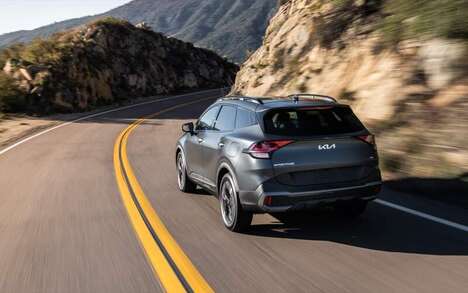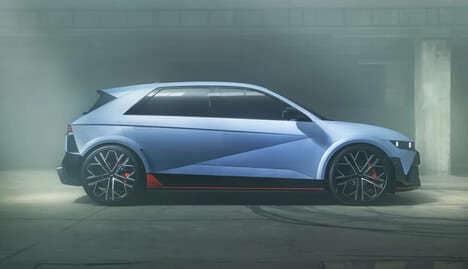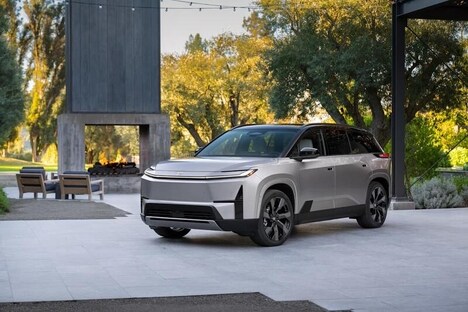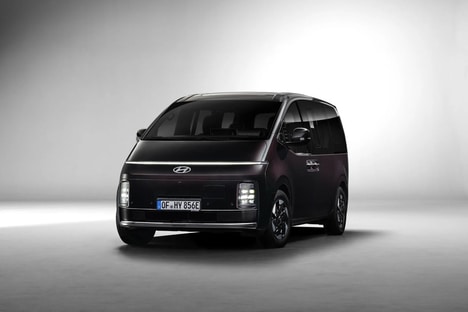
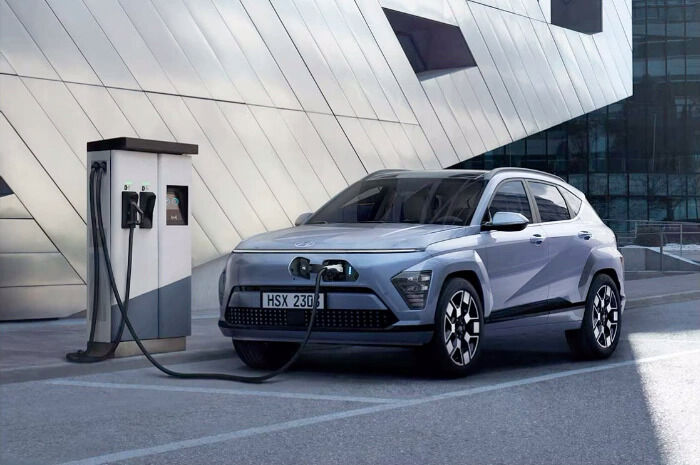
The second-generation Hyundai KONA EV is slated to arrive in the European market this summer where it will deliver an impressive driving experience thanks to a series of updates. The vehicle boasts a Smart Regenerative System to support driving range estimates up to 490-kilometers and also features a heads-up display for intuitive navigation. The vehicle will come in standard or long-range models as well as a hybrid electric (HEV) and internal combustion engine (ICE) options to boot, which will support the various needs of today's consumer.
President and CEO Jaehoon Chang spoke on the second-generation Hyundai KONA EV saying, "KONA Electric will play a major role alongside our IONIQ models in reinforcing Hyundai’s EV leadership. The new model builds on the great reputation of the first-generation KONA Electric and is designed and engineered to lead the competition with its many outstanding features."
Key Themes Behind This Trend
- Eco-friendly Evs
- Opportunities for innovation in creating electric vehicles with longer driving ranges and intuitive displays.
- Smart Regenerative Systems
- Innovations in developing systems that regenerate energy and optimize driving ranges, increasing efficiency and sustainability.
- Hybrid Electric and Internal Combustion Engines
- Opportunities for innovation in creating cars that offer consumers a choice in power sources to best fit their needs.
Where This Applies
- Automotive Industry
- The automotive industry has a large opportunity to develop more eco-friendly and energy-efficient vehicles.
- Technology Industry
- Innovations in technology can further improve the driving experience for consumers through intuitive displays, regenerative systems, and made-to-fit engines.
- Environmental Industry
- Innovations in renewable energy sources, energy storage, and sustainable materials can help to create eco-friendly vehicles that are more efficient and have less environmental impact.