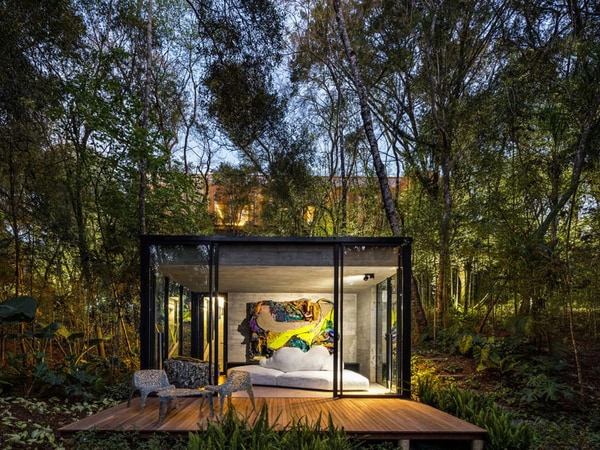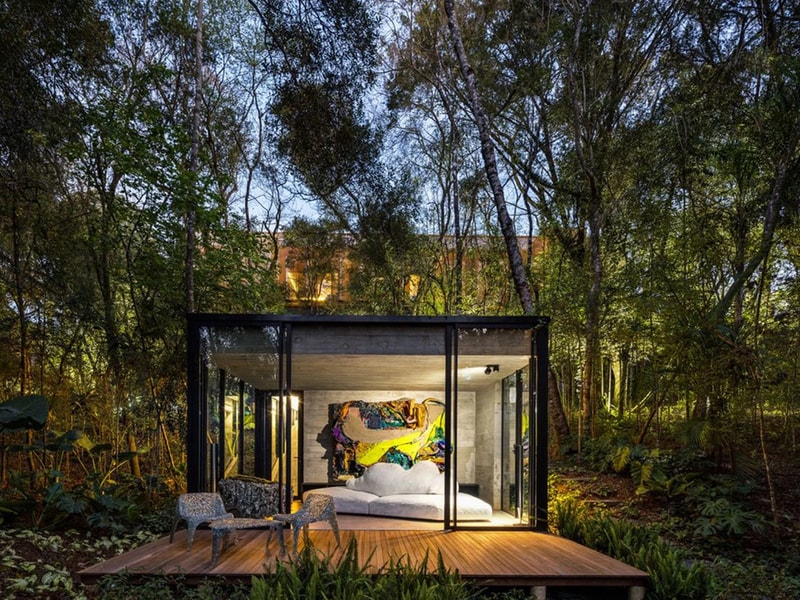
The House 17-JB by Luiz Volpato Architects is a 1,113-square-metre residence built within a protected forest site in Curitiba, Brazil. The House 17-JB by Luiz Volpato Architects occupies only 30 percent of a 2,300-square-metre plot, with construction concentrated at the front to preserve native vegetation. The design responds directly to steep topography and environmental constraints through four stacked volumes, including two elevated and two semi-underground, allowing the structure to adapt to the terrain rather than reshape it.
The upper levels contain private suites and a family living area positioned at canopy height, aligning interior spaces with surrounding tree lines. Materials include timber, stone, and muted tones that integrate visually with the landscape. The project balances modernist and brutalist influences through structural clarity and restrained material use. The house was developed as a site-driven response.
Image Credit: Luiz Colpato Architects
What's Driving This Trend
- Site-responsive Architecture
- Designs that prioritize embedding built form within existing topography and vegetation open possibilities for new structural systems and foundation techniques tailored to irregular sites.
- Canopy-level Living
- Elevating primary living spaces to align with tree lines creates demand for novel vertical access solutions and lightweight floor systems that minimize ground disturbance.
- Minimal-footprint Development
- Concentrating construction on a small portion of a plot while preserving native ecosystems suggests business models centered on high-value, low-impact dwellings and modular semi-underground construction methods.
Who This Affects Most
- Residential Architecture
- Architectural practices focused on terrain-driven design could incorporate advanced site analysis tools and hybrid material palettes to deliver bespoke homes that respond to ecological constraints.
- Sustainable Construction Materials
- Producers of timber, stone composites, and low-visual-impact finishes may innovate supply chains and engineered products optimized for integration with natural landscapes and structural clarity.
- Landscape Conservation Consulting
- Advisory services that blend ecological preservation with development planning are positioned to create frameworks for regulatory-compliant, site-sensitive projects that maintain native vegetation.