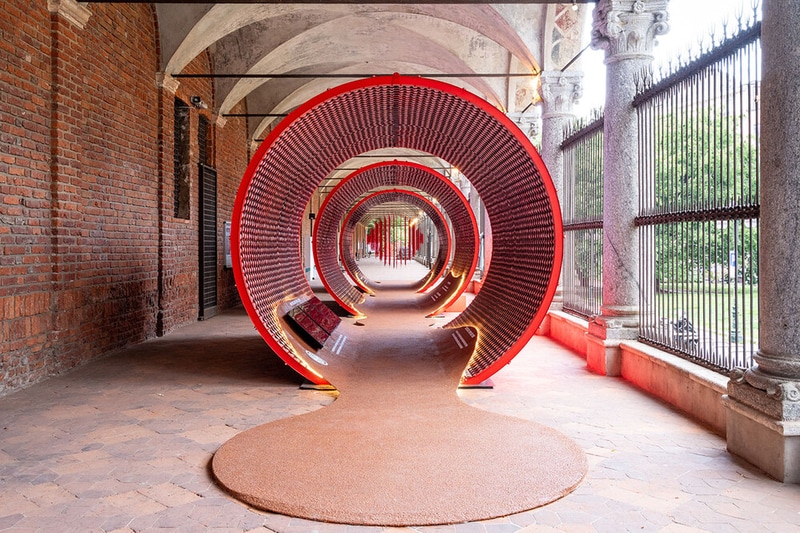
The House of Polpa Carlo Ratti Associati x Mutti is a temporary installation constructed from approximately 20,000 cans of tomato pulp. The House of Polpa Carlo Ratti Associati x Mutti forms a cylindrical tunnel spanning over 25 meters, installed beneath the portico of the Università degli Studi di Milano. The cans are supported by a steel framework that allows them to be stacked securely while remaining removable throughout the exhibition.
Visitors walk through the structure, where scent, sound, and texture reference the tomato production process. The flooring is made using resin developed from dried tomato peels recovered from industrial waste. Guests are invited to take cans from the structure, gradually dismantling it over time. Remaining cans are later donated, extending the project beyond the installation period.
Image Credit: Saverio Lombardi Vallauri
Why This Trend Is Growing
- Circular Material Reuse
- Repurposing industrial food waste into structural or finish materials creates new value chains that reduce disposal costs and raw material demand.
- Sensory-rich Spatial Design
- Immersive environments that combine scent, sound, and texture offer alternative ways to communicate brand narratives and deepen visitor engagement in public spaces.
- Modular Removable Architecture
- Stackable, demountable components enable temporary installations to serve multiple lifecycle functions from exhibition asset to redistributed goods.
Industries Being Reshaped
- Food Packaging
- Transforming single-use packaging into design elements or secondary products could shift perceptions of waste and create circular revenue streams for producers.
- Exhibition and Event Design
- Temporal installations that incorporate reclaimable materials can redefine cost structures by blending marketing, product distribution, and experiential storytelling.
- Sustainable Construction Materials
- Developing binders and composites from agro-industrial byproducts presents opportunities to lower embodied carbon and introduce biodegradable building components.