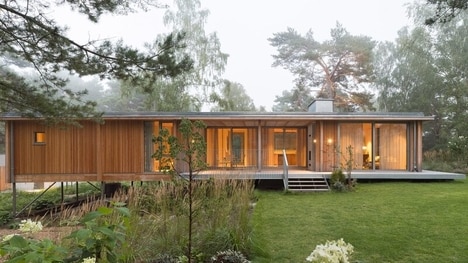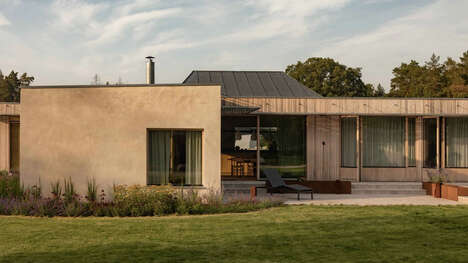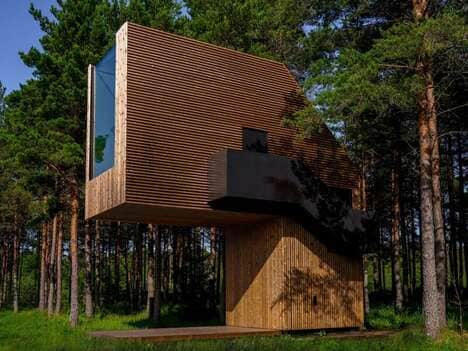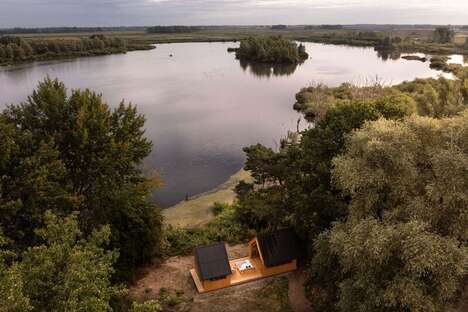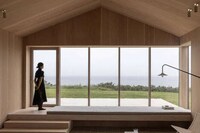

Rotterdam-based Orange Architects have completed a holiday home on a Dutch island called Texel. The compact home was designed to adapt to the occupant's needs throughout the day.
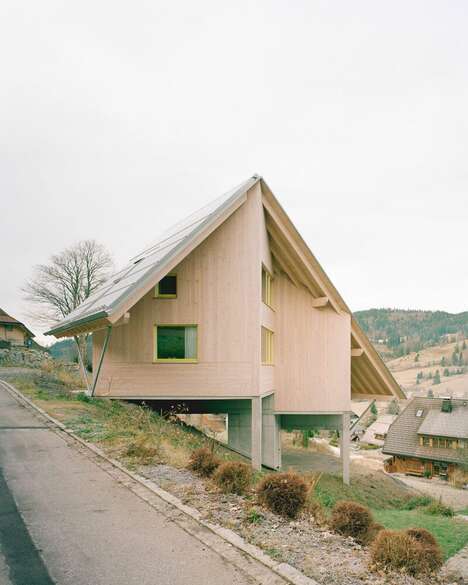
The cabin is nestled in a foliated landscape and sits just ten minutes from the North Sea. The exterior is clad with black-stained timber and is completed with a sloping roof. The home only occupies 70 square meters and was specifically designed to respond to the island's particular climate. The southern elevation is finished with floor-to-ceiling windows which allow sunlight to shine in, while the northern elevation is closed-off to protect the home from strong winds.
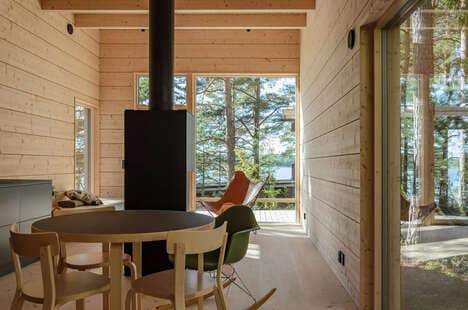
As the space is rather small, the architect's favored a light-colored birch and employed movable panels that divide the space rather than building walls. This way, the homeowners can move the panels according to their needs - whether that be creating an extra room or dividing the living space from the dining room.
Image Credit: Orange Architects
What's Driving This Trend
- Adaptable Homes
- Homes designed with multifunctionality in mind provide homeowners with flexibility in how they use their spaces.
- Movable Panels
- Movable panels that allow homeowners to customize their living spaces can be an innovative feature to incorporate into small homes and apartments.
- Compact Architecture
- Designing homes to be compact and responsive to local climates can be a strategy for creating sustainable and affordable housing options.
Who This Affects Most
- Real Estate
- Adaptable homes can provide a unique selling point for real estate developers, offering buyers more flexible and dynamic living spaces.
- Architecture
- Designers who incorporate movable panels and adaptable features into their work can create innovative and sustainable architecture that meets the evolving needs of homeowners.
- Construction
- Developing sustainable and efficient building materials and techniques to support compact and adaptable architecture can be a disruptive innovation opportunity for the construction industry.