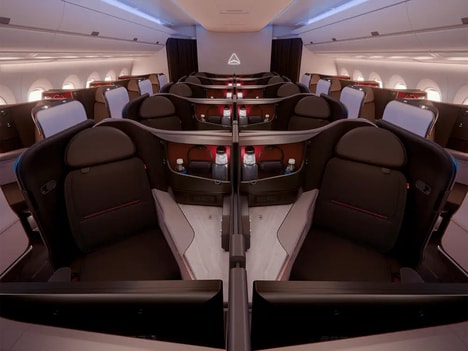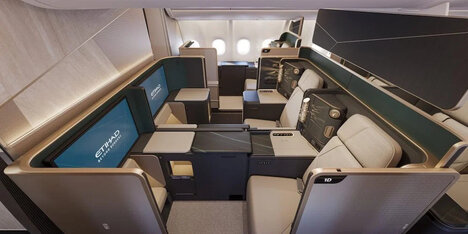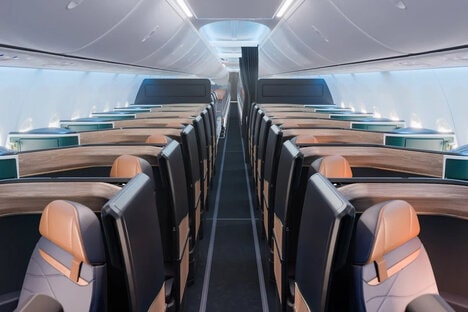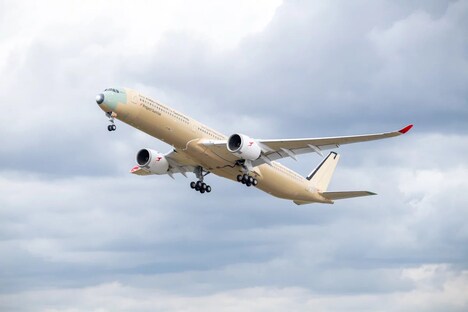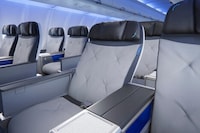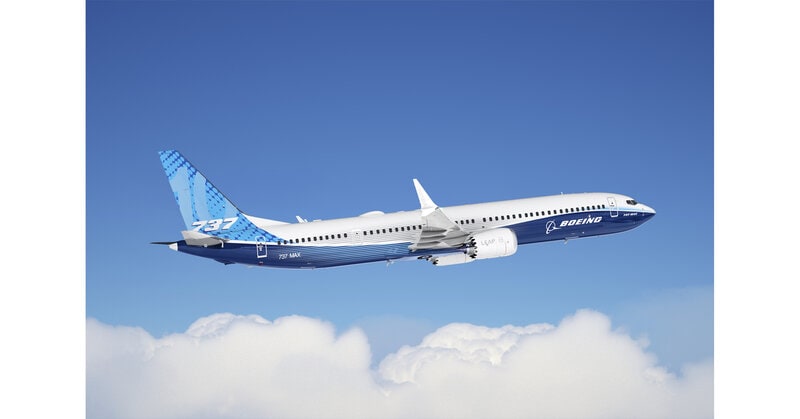
Boeing completed the 737 MAX family with the '737-10,' the largest jet in that lineup, now cleared by the Federal Aviation Administration for delivery in the coming months. Built for airlines seeking a higher-capacity narrow-body option, the aircraft features the line's largest cabin and a revised Angle-of-Attack system that tracks the plane's nose position and will become standard across the MAX family.
In its highest-density layout, the 737-10 carries up to 230 passengers. It also has the lowest seat cost among single-aisle aircraft in service, giving carriers a way to add capacity within a single-aisle fleet.
With 1,555 orders from more than 30 customers worldwide, the model strengthens Boeing's pitch to airline buyers balancing route flexibility against per-seat cost. FAA approval under the 2020 certification law also gives Boeing a fully certified top-end option for airlines standardizing on the MAX family.
Image Credit: Boeing
Why This Trend Is Growing
- High-density Narrow-body Aircraft
- Airlines are finding new economics in single-aisle jets that carry more passengers while preserving route flexibility and lowering per-seat operating costs.
- Standardized Safety Systems
- Updated flight-control and sensor architectures across aircraft families create openings for certified platform-wide safety upgrades and aviation software differentiation.
- Fleet Simplification Strategies
- Carrier interest in common aircraft families reflects a shift toward lower training, maintenance, and operational complexity across expanding route networks.
Industries Being Reshaped
- Commercial Aviation
- Higher-capacity narrow-body jets reshape airline network planning by enabling dense routes without requiring larger wide-body aircraft.
- Aircraft Manufacturing
- Competition around single-aisle capacity and certification milestones drives product differentiation through cabin design, fuel efficiency, and avionics integration.
- Aerospace Safety Technology
- Regulatory clearance of revised angle-of-attack systems highlights growth potential for advanced sensors, redundancy tools, and compliance-focused flight technologies.