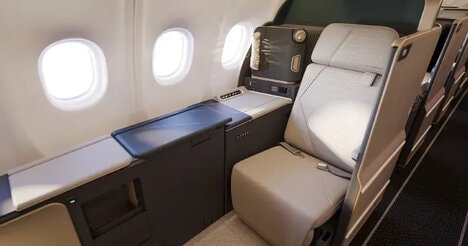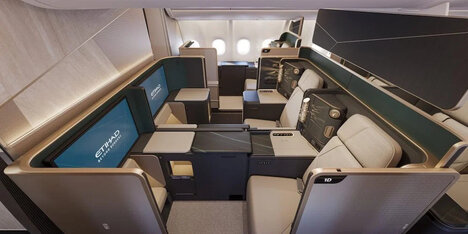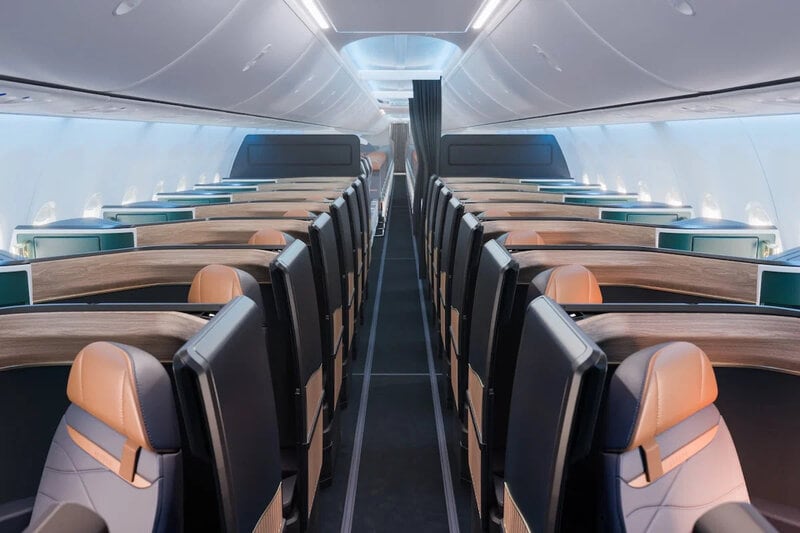
Alaska Airlines is bringing flat-bed seating to narrow-body flights with a premium Boeing 737 MAX 10 configuration designed for longer trips. The airline plans to use at least 25 jets in a three-cabin layout, with its long-haul business class branded as 'Aurora Suites.'
The business cabin uses reverse-herringbone seats with direct aisle access, giving each traveler a more private place to work, rest, or sleep. The aircraft also add 12 Premium Reserve premium-economy seats, so the cabin mix offers a clearer step-up from standard economy to business class.
For travelers, this means narrow-body transcon flights can feel much closer to a wide-body experience. For the category, Alaska is addressing a familiar complaint about premium short-haul flying: a lack of true lie-flat comfort on smaller planes.
Image Credit: One Mile at a Time
Why This Trend Is Growing
- Narrow-body Luxury
- Premium cabin features migrating onto single-aisle aircraft create new openings for differentiated long-haul comfort without wide-body operating costs.
- Lie-flat Transcon Travel
- Flat-bed seating on domestic and transcontinental routes reshapes passenger expectations around rest, privacy, and productivity on mid-range flights.
- Tiered Premium Cabins
- A clearer progression from economy to premium economy to business class supports more nuanced fare segmentation and upgraded in-flight experiences.
Industries Being Reshaped
- Commercial Aviation
- Airlines can redefine aircraft deployment strategies as narrow-body jets gain the comfort credentials traditionally associated with larger long-haul planes.
- Aircraft Interiors
- Seat manufacturers and cabin designers face growing demand for compact luxury layouts that preserve density while adding privacy and direct aisle access.
- Business Travel
- Corporate travel programs may increasingly value single-aisle premium cabins that combine route flexibility with sleep-ready seating for productivity-focused travelers.