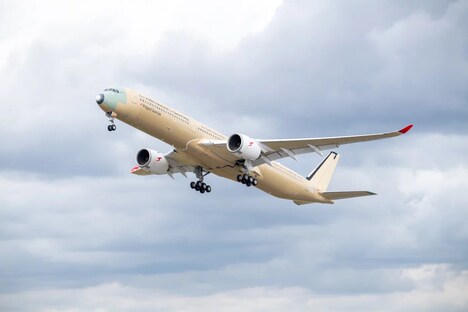

Riyadh Air opened public ticket sales on six routes — London, Cairo, Dubai, Jeddah, Madrid and Manchester — following the arrival of its first three Boeing 787-9 Dreamliners. The London service was moved up to June 10, 2026. The Saudi carrier's fleet will ultimately comprise 72 Dreamliners as it works toward a target of more than 100 destinations by 2030.
Each aircraft features a four-class cabin configuration, including Business Elite, Business, Premium Economy and Economy, with fully flat-bed layouts in the top two classes, Bluetooth audio connectivity at every seat and Panasonic Avionics' Astrova IFE system offering more than 500 movies and 600 TV series.
As Gulf carriers continue to expand their global footprints, Riyadh Air shows how new airlines are launching with a premium-first strategy from day one.
Image Credit: Shutterstock/Falcons Spotters
Why This Trend Is Growing
- Premium-first Airline Launches
- New carriers are entering competitive long-haul markets with upscale cabin strategies that can reposition passenger expectations before broad network scale is achieved.
- Connected In-flight Experiences
- Seatwide Bluetooth audio, advanced entertainment platforms and deep content libraries reflect a growing opportunity for airlines to differentiate through digitally enhanced onboard environments.
- Gulf Hub Expansion
- Rapid route growth from Gulf-based airlines is reshaping international connectivity patterns and creating new pressure on legacy carriers serving Europe, Africa and Asia.
Industries Being Reshaped
- Commercial Aviation
- Fleet investment in fuel-efficient widebody aircraft is enabling emerging airlines to build global networks around premium service, long-range performance and destination density.
- Travel Technology
- Integrated in-flight entertainment, wireless connectivity and personalized cabin systems are becoming valuable platforms for passenger engagement and ancillary revenue innovation.
- Tourism and Hospitality
- Expanded nonstop air access to major cities can stimulate inbound tourism, hotel demand and premium travel packages tied to newly connected regional hubs.