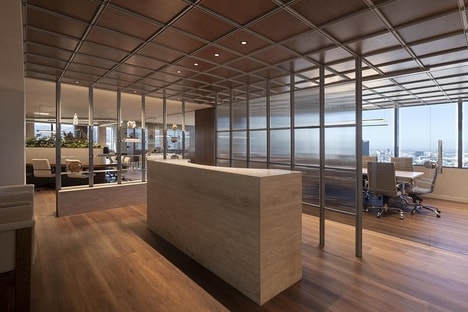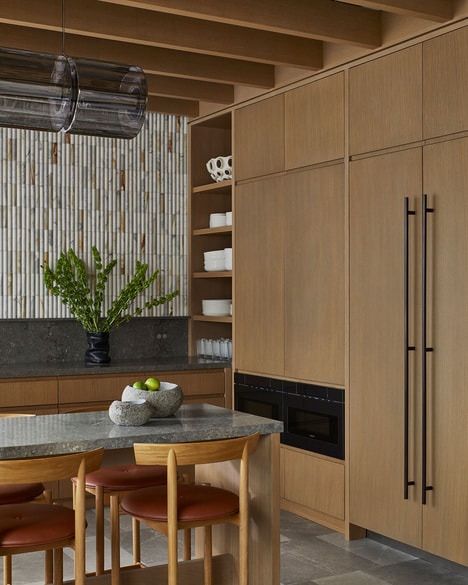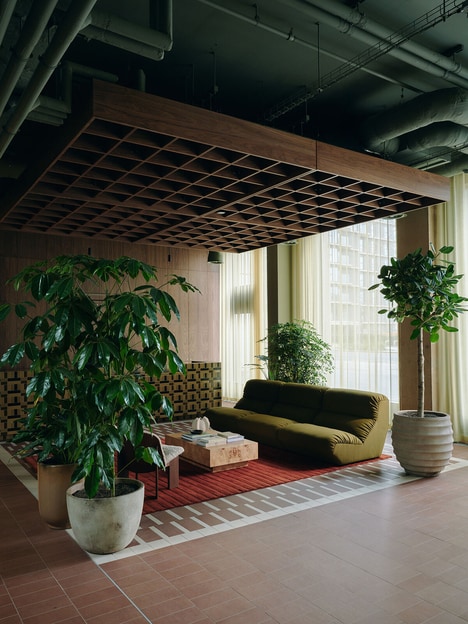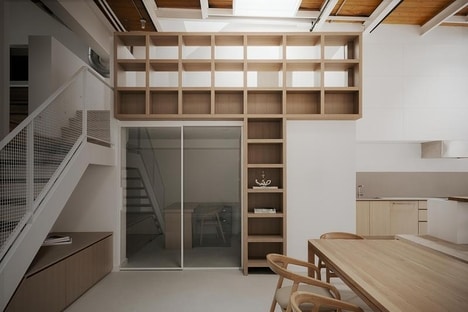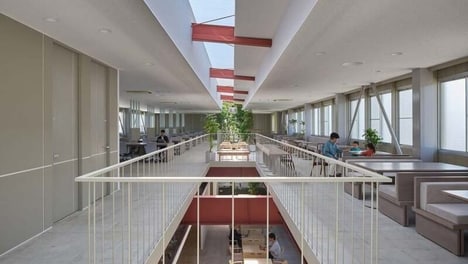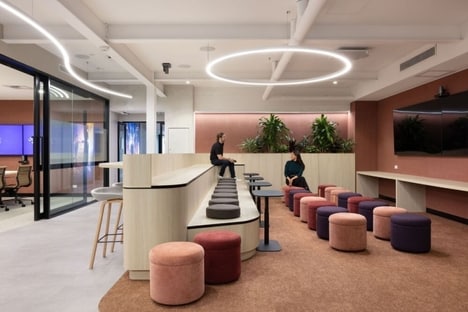
RCA Studio, a Melbourne-based architecture and interior design practice, has completed the headquarters for Harry the Hirer. Through this project, the studio transformed four levels of a neglected century-old cotton mill in Abbotsford into a dynamic workspace that reflects the company's high operational pace and engaged culture while honoring the building's industrial heritage. The intervention introduced a central void cut through the height of the building. This connects all four levels visually, acoustically, and physically, with a powder-coated perforated steel lift anchoring the space and allowing natural light to penetrate the once-dark, deep floorplate.
Robots mapped the tube light installation, undulating LED panels were installed to millimetre tolerance, and custom carpet finishes reflect activity throughout the workspaces, while the existing structure was retained to encourage movement and engagement throughout the intervention.
Image Credit: Veeral Patel
Key Themes Behind This Trend
- Heritage-adaptive Workspaces
- Historic industrial buildings are becoming high-performance offices where preserved architectural character combines with modern circulation, lighting, and collaboration features.
- Precision-integrated Interiors
- Robotic mapping, millimetre-tolerant installations, and customized finishes are redefining workplace design through more exact, immersive, and responsive spatial experiences.
- Vertical Connectivity Design
- Central voids, transparent lifts, and multi-level sightlines are reshaping office environments into more connected ecosystems that support visibility, movement, and cultural cohesion.
Where This Applies
- Commercial Interior Design
- Design firms can differentiate through adaptive office concepts that merge heritage preservation with technology-enabled spatial performance.
- Architecture and Urban Renewal
- Regeneration projects are gaining value from converting underused industrial assets into contemporary workplaces with cultural and environmental relevance.
- Smart Building Technology
- Advanced lighting systems, robotic measurement tools, and integrated material planning are expanding the role of digital infrastructure in physical workplace transformation.