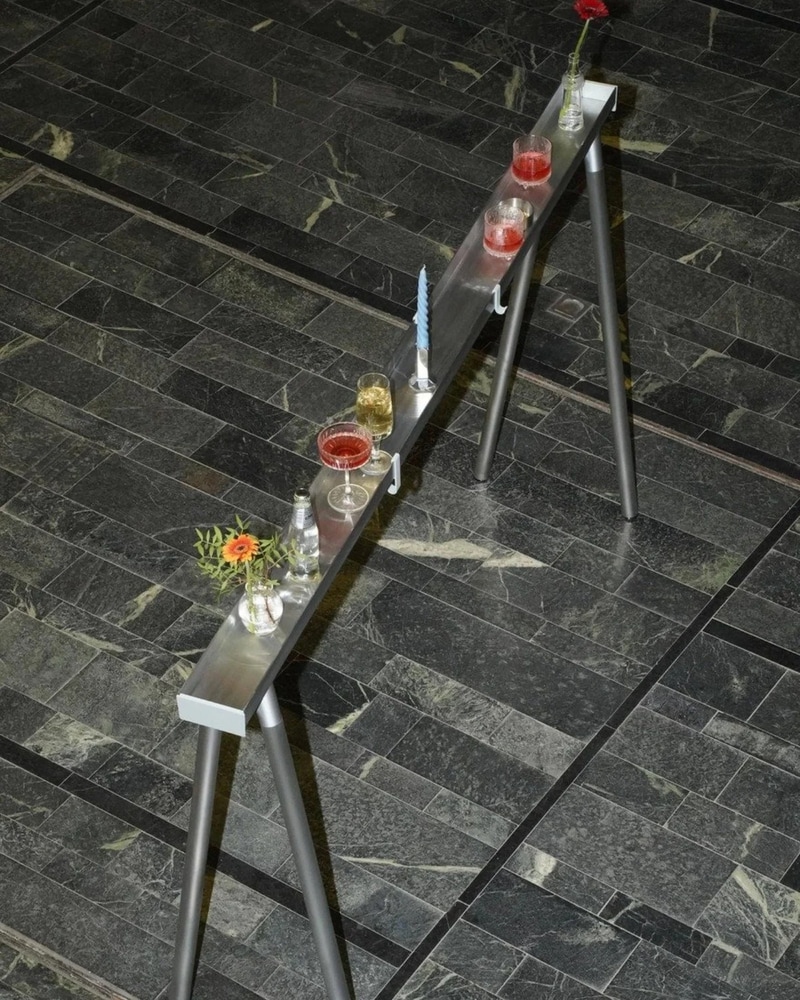
Hang On is a table system developed by Stuttgart-based designer Fengfan Yang in collaboration with Danish furniture brand +Halle. The design rethinks conventional table construction through an extruded profile structure that serves as the primary framework. Instead of relying on fixed components, tabletops and accessories attach directly to the structural frame through a hanging system. This approach allows the table to be assembled, reconfigured and disassembled with minimal effort while adapting to different spatial requirements.
The system was designed for high-traffic public environments including restaurants, canteens, airports, shopping centres, markets and event venues. Its modular construction supports changing layouts and simplifies maintenance in spaces that require frequent rearrangement. The extruded profile structure also reduces manufacturing complexity by concentrating the design around a single core framework that can support multiple configurations. D
Image Credit: Fengfan Yang + Halle
Key Themes Behind This Trend
- Modular Public Furniture
- Adaptable table systems with interchangeable components create new value in high-traffic venues where layouts, maintenance needs, and user flows change frequently.
- Hanging Component Systems
- Furniture built around suspended attachment points introduces flexible accessory ecosystems that can reduce replacement costs and extend product lifecycles.
- Reconfigurable Shared Spaces
- Public environments benefit from infrastructure that supports rapid spatial transformation, enabling venues to shift between dining, work, retail, and event functions.
Where This Applies
- Commercial Furniture
- Manufacturers can differentiate through standardized structural frameworks that support multiple product formats while simplifying production and customization.
- Hospitality Design
- Restaurants, canteens, and lounges gain operational flexibility from furniture platforms that accommodate changing seating plans and service requirements.
- Transportation Hubs
- Airports and transit centers present demand for durable modular furnishings that adapt to fluctuating passenger volumes, maintenance cycles, and temporary uses.