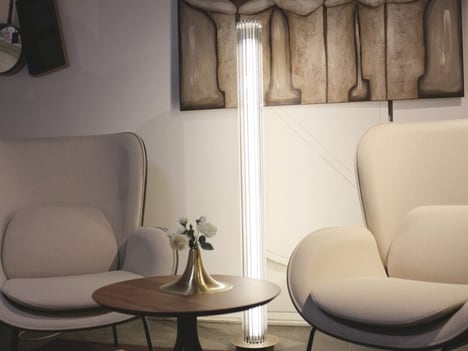
The Geolectric lantern is a sustainable electronics concept that explores new material possibilities using the Geolectric lantern. Developed by the MIT Design Intelligence Lab, the lamp uses alkaline-based geopolymers shaped at room temperature, enabling electronics to be embedded cleanly within the form. The design features two geopolymer components connected by a ribbed glass tube and a proximity sensor that brightens a ring of LEDs as the user’s hand approaches. The lamp only reaches full brightness upon touch, offering a minimal and intuitive interaction.
The project demonstrates how geopolymers can mimic the tactile warmth of ceramics while avoiding high-temperature firing or carbon-heavy production. This approach allowed the team to eliminate visible seams and screws while exploring more expressive forms than traditional consumer electronics. Geolectric was originally created as a gift for former Irish president Mary Robinson and references the welcoming lantern she placed in her residence window in 1990. A second lantern now sits at MIT as a symbol of openness for students and visitors.
Image Credit: MIT Design Intelligence Lab
What Makes This Trend Stand Out
- Eco-friendly Geopolymer Innovations
- The use of alkaline-based geopolymers in sustainable electronics showcases a potential for reduced carbon footprints and enhanced material efficiency.
- Intuitive Touch-activated Lighting
- Touch-activated LED systems provide minimalistic user interactions, offering convenience and energy efficiency through controlled lighting engagement.
- Seamless Design Aesthetics
- Design elements that eliminate visible seams and screws create an opportunity for more visually appealing and innovative product forms.
Sectors Adopting This
- Sustainable Consumer Electronics
- Incorporating eco-friendly materials like geopolymers positions companies to lead in the development of green electronics with reduced environmental impact.
- Smart Home Technologies
- Integrating proximity sensors and touch-activated features into home lighting systems can redefine user experience and smart automation.
- Lighting Design
- Advancements in seamless geopolymer construction offer new possibilities for creative, durable, and sustainable lighting solutions.