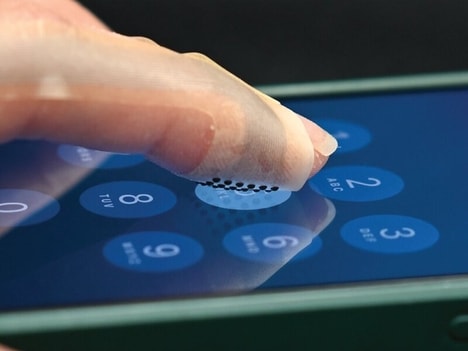
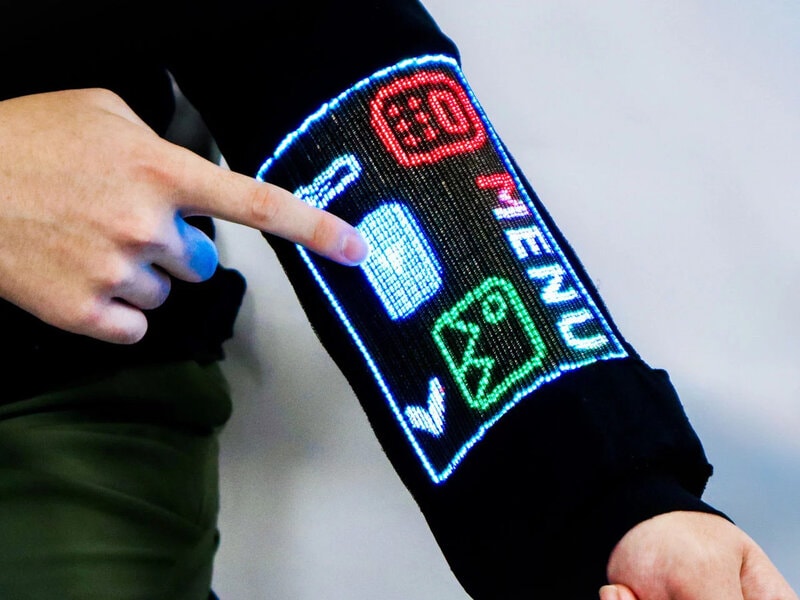
The National University of Singapore (NUS) created a garment touchscreen with electronics built into the fibers, letting wearers tap a sleeve to control functions on their clothing. It uses strands that double as illuminated pixels and touch sensors, instead of mounting a separate screen on top of fabric.
Its sleeve display runs at 96 x 54 pixels, enough for simple visuals and tap-based input. The fabric can show body temperature or send commands to a paired Bluetooth device. The findings appeared in Nature on 21 October 2026.
Surviving 50 machine washes and 1,000 bends puts this kind of textile interface closer to apparel that can be worn and cleaned like normal clothing. Electronics embedded in breathable, flexible fibers widen the case for garment-based health readouts and quick controls, not just heated or audio-equipped wearables.
Image Credit: NUS Materials Science and Engineering
What Makes This Trend Stand Out
- Fiber-embedded Interfaces
- Textile electronics that turn fabric strands into pixels and sensors create new potential for discreet controls, status displays, and adaptive functions built directly into everyday clothing.
- Washable Wearable Displays
- Durable smart fabrics able to withstand laundering and repeated bending make connected apparel more viable for long-term consumer, medical, and industrial use.
- Garment-based Health Readouts
- Sleeve-level visual feedback for metrics like body temperature points to clothing becoming a passive monitoring layer for wellness, safety, and remote care applications.
Sectors Adopting This
- Smart Apparel
- Fashion and performance-wear brands gain room to differentiate with garments that merge comfort, interactivity, and digital utility without adding rigid device components.
- Digital Health
- Healthcare providers and medtech companies could see fabric-based interfaces expand continuous monitoring into less intrusive, more wearable forms.
- Consumer Electronics
- Device makers may treat clothing as an input and display surface, extending Bluetooth controls and ambient information beyond phones, watches, and earbuds.