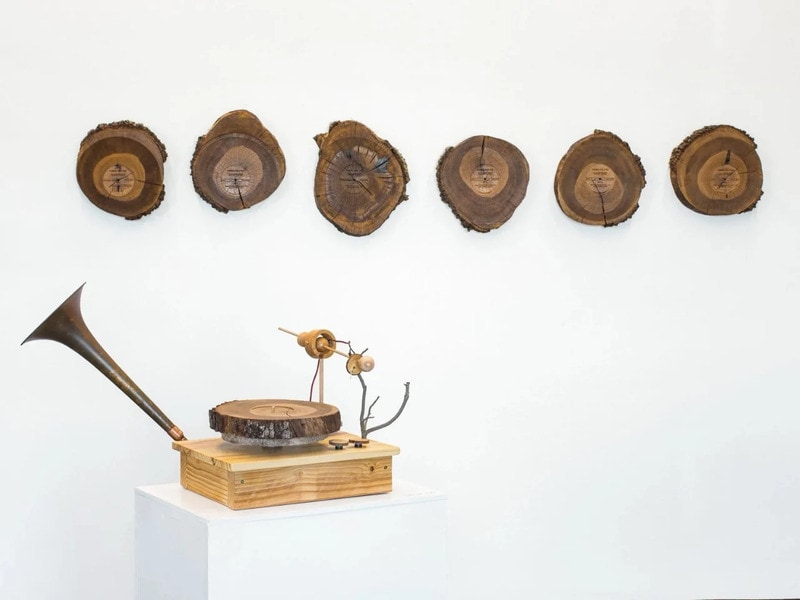
Funeral for a Tree is a sound sculpture created by artist Steve Parker as a tribute to a 65-year-old live oak that died from oak wilt in his front yard. Parker cut cross-sectional slices of the oak trunk and hand-carved grooves directly into the wood to form playable records. The carved records are displayed on walls, and a custom Victrola-style turntable built by the artist plays them. The grooves on the wooden discs are etched with the songs of migratory birds that once nested in the tree, producing a textured, resonant sound when played.
In addition to the wooden records, the installation includes a companion piece called Sheng Shrine composed of brass valves, copper tubing, and ventilator equipment repurposed into a plant-like instrument form. The exhibition integrates these elements on pedestals and wall mounts to evoke memory, sound, and the tree’s presence.
Image Credit: Steve Parker
What Makes This Trend Stand Out
- Playable Wooden Records
- The convergence of natural materials and music technology in creating playable wooden records offers a tactile and auditory experience that transforms traditional sculptures into interactive sound art.
- Nature-inspired Sound Installations
- Infusing elements from the natural world into sound installations provides audiences with immersive experiences that blend art, environment, and memory.
- Repurposed Instrumentation
- Turning everyday or discarded materials into musical instruments fosters innovation in sustainable art practices and highlights creative reuse.
Sectors Adopting This
- Artisanal Audio Equipment
- The creation of custom audio equipment like turntables for specific artistic installations opens up avenues in niche market craftsmanship.
- Sustainable Art Practices
- Innovations in using natural and repurposed materials for art and music underscore an industry shift towards eco-conscious creativity.
- Interactive Museum Exhibits
- Integrating playable sculpture pieces into exhibitions enhances visitor engagement through interactive storytelling using sound-based memories.