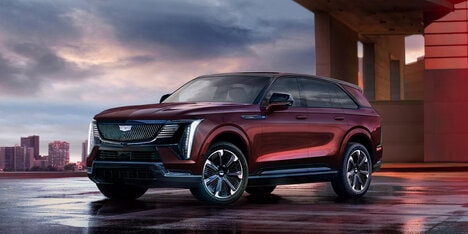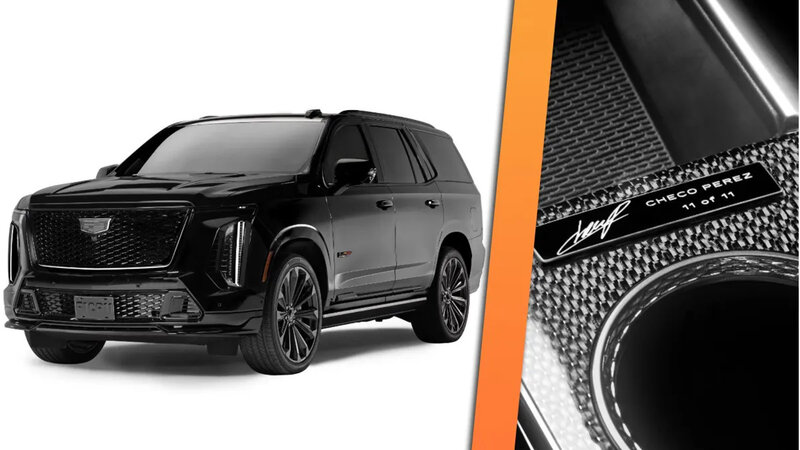
Cadillac's 'Checo Perez Edition Escalade V' offers Formula 1 fans a roadgoing collectible, using a styling package instead of extra power to set it apart. The three-row SUV keeps its supercharged 6.2-liter V8, and output stays at 682 horsepower, so the edition leans on design cues instead of extra speed.
Cadillac limits the model to black or white finishes linked to its Formula 1 car, and each SUV gets a numbered plaque that reinforces the collector angle. Matching Perez's racing number ties the SUV more tightly to the driver, so buyers get built-in scarcity instead of a broader trim package.
All 11 units are reserved for Mexico, where the edition carries the equivalent of a $222,500 price. That market-specific run turns a high-performance luxury SUV into a stronger expression of Cadillac's Formula 1 crossover between racing and road cars.
Image Credit: Cadillac
Key Themes Behind This Trend
- Motorsport-branded Luxury
- Racing affiliations are becoming high-value design assets for premium vehicles, creating scarcity-driven appeal without requiring mechanical upgrades.
- Market-specific Collectibles
- Regionally limited product runs can deepen local fan engagement while transforming standard luxury goods into culturally relevant status symbols.
- Design-led Performance Editions
- Visual differentiation and numbered details are reshaping performance branding, allowing automakers to command exclusivity premiums beyond horsepower gains.
Where This Applies
- Luxury Automotive
- Premium automakers can extend flagship models through collectible variants that merge lifestyle identity, exclusivity, and motorsport credibility.
- Motorsports Marketing
- Formula 1 partnerships are expanding into consumer products that convert driver fandom into tangible, high-margin ownership experiences.
- Collector Goods
- Limited-edition vehicles reflect a broader appetite for numbered, story-rich assets that blend emotional fandom with investment-style appeal.