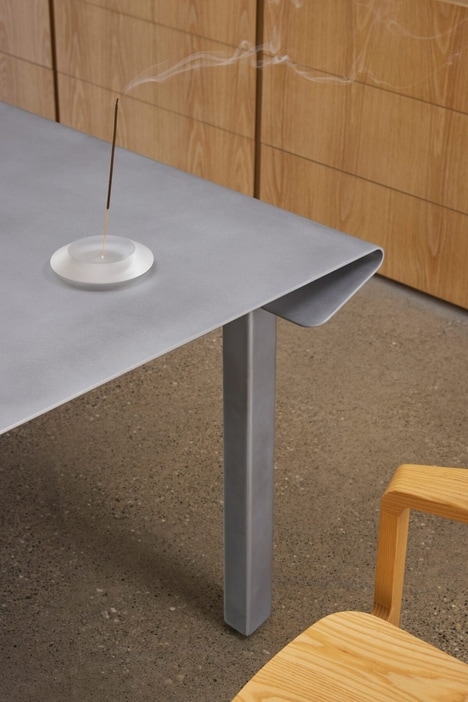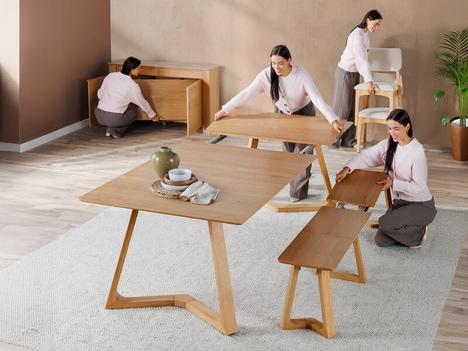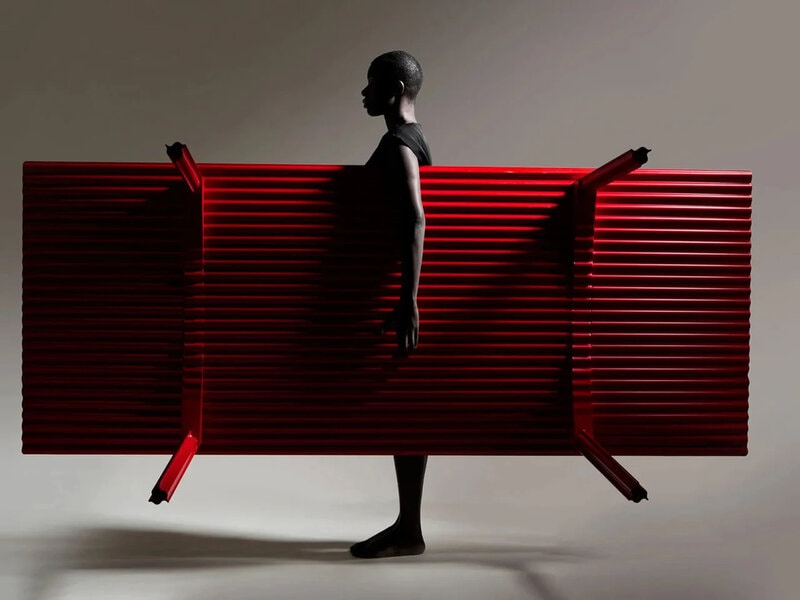
LAYER's Ripple research table is built for households that need a dining surface without the lifting hassle, using thin plywood pressed into a corrugated core under a flat top. The construction keeps plates and laptops on an even surface while shifting the structural work below, so one person can reposition the table more easily.
Ripple weighs about 19.8 pounds and measures roughly 8.2 feet long, an uncommon ratio for a table meant to be moved by one person. LAYER developed it with Canadian manufacturer Corelam through pressure lamination, and the updated design uses hollow triangular legs and a curved underside to add rigidity without much extra mass.
Ripple's 19.8-pound build widens what buyers can expect from large dining furniture, turning easy repositioning into a feature instead of a moving-day problem. Its research-project status makes the corrugated plywood approach a test case for using less wood while keeping a conventional top.
Image Credit: Yanko Design - Modern Industrial Design News
What Makes This Trend Stand Out
- Ultra-light Furniture
- Weight reduction in full-scale home furnishings creates openings for premium designs that combine everyday durability with single-person mobility.
- Corrugated Wood Structures
- Engineered plywood cores introduce material-efficient construction methods that preserve familiar surfaces while reducing mass and resource use.
- Flexible Dining Spaces
- Large movable tables reflect a shift toward adaptable households where furniture supports dining, work, and social uses without permanent layouts.
Sectors Adopting This
- Furniture Design
- Lightweight structural innovation expands the market for oversized pieces that are easier to handle, ship, and reconfigure.
- Engineered Wood
- Pressure-laminated plywood systems offer manufacturers a path to stronger, lighter products with lower material intensity.
- Home Interiors
- Adaptable furnishings are reshaping interior planning as compact and multipurpose homes require pieces that move as easily as lifestyles change.