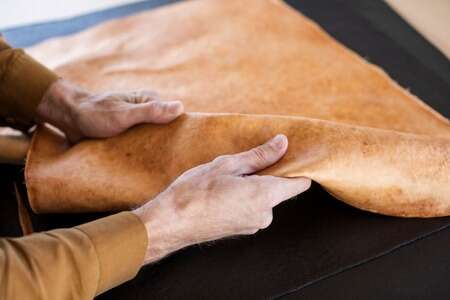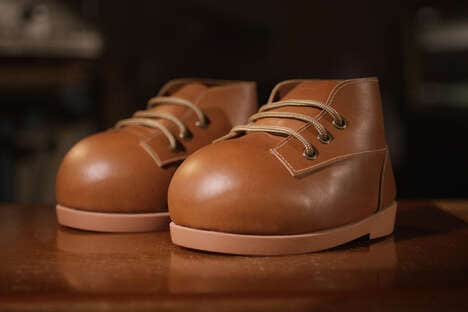

Ephea Uma has been launched by SQIM as a mycelium-based material for the luxury accessories market to offer a more sustainable alternative to leather without sacrificing quality, performance or feel. The material is grown rather than manufactured thanks to its mycelium composition and features a low-impact profile that could be used in place of leather or a variety of other materials. The cruelty-free material is fully traceable and drastically cuts the amount of water and land required, while also cutting CO₂ impact when compared to conventional leather.
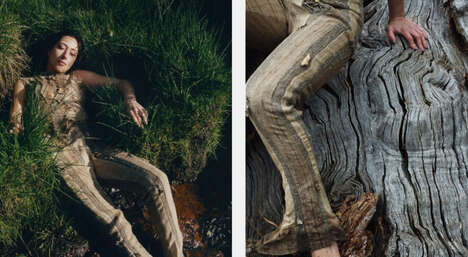
Ephea Uma from SQIM is also capable of being dyed virtually any color to provide customers with the ability to achieve a near-infinite number of shades. The material's versatility means it could be used in a wide number of fashion applications including with accessories, but also wearable garments.
Image Credit: SQIM
What's Driving This Trend
- Mycelium-based Luxury Materials
- A cultivated fungal matrix that mimics leather offers high-end tactile qualities while substantially lowering environmental inputs compared with animal hides.
- Plant-compatible Color Customization
- Near-infinite dyeability of bio-fabricated substrates enables on-demand color personalization without relying on traditional, pollutive tanning chemistries.
- Traceable Low-impact Supply Chains
- Fully traceable growth-to-garment production models reduce water, land and CO₂ footprints while increasing provenance transparency for conscious consumers.
Who This Affects Most
- Luxury Fashion Accessories
- High-touch goods such as handbags and wallets can leverage cruelty-free, high-performance mycelium materials to meet premium aesthetic and sustainability expectations.
- Sustainable Footwear Manufacturing
- Boots and shoes could integrate bio-fabricated leather analogues to decrease reliance on animal leather and simplify end-of-life considerations.
- Automotive Interior Design
- Vehicle cabins stand to benefit from durable, dyeable mycelium surfaces that combine upscale look-and-feel with a smaller environmental footprint.