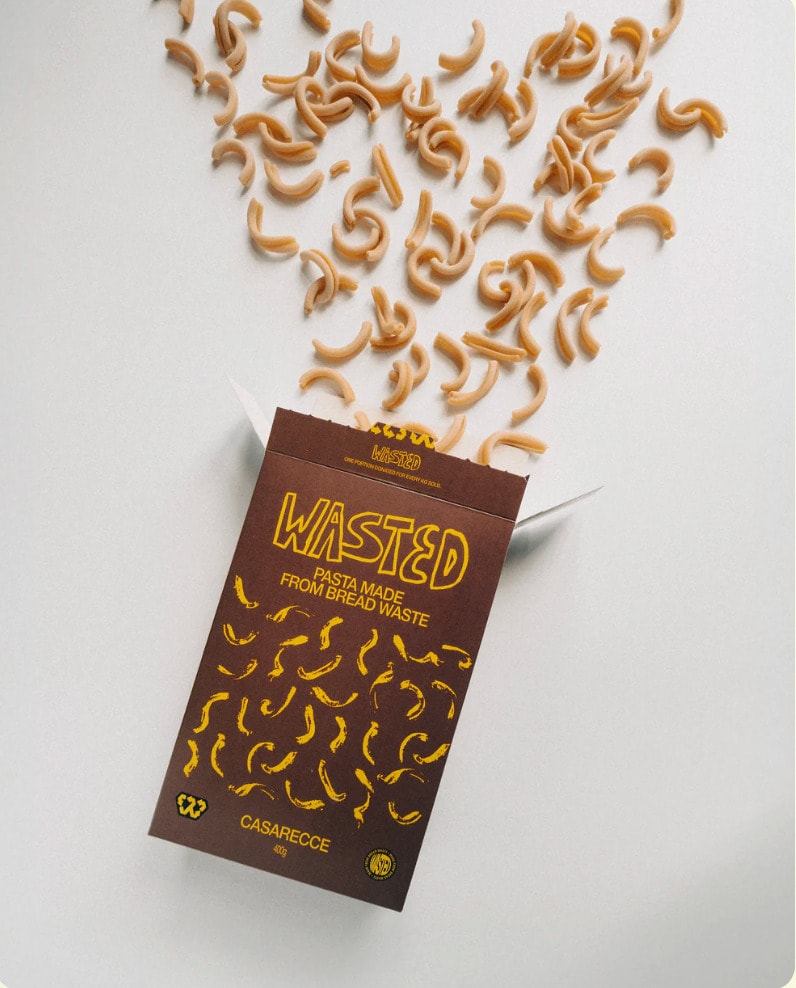
Eat Wasted, a European pasta brand that has gained recognition among Michelin-starred chefs, is making its debut in the United States later this month. The company transforms rescued artisanal bread into premium pasta. This approach addresses the significant issue of food waste while delivering a distinctive culinary experience.
Eat Wasted was founded by former chef Leif Friedmann and Jorge Aguilar, who recognized an opportunity to elevate an often-discarded ingredient by using traditional pasta-making techniques to create a product that rivals conventional pasta in quality and taste. The bread-based recipe yields a naturally rough surface that excels at gripping sauces. It imparts a subtle toasty depth that distinguishes it from traditional semolina pasta, while each serving saves approximately one slice of bread from waste. The brand also incorporates a social impact component by donating one portion of pasta for every ten sold.
Image Credit: Eat Wasted
Key Themes Behind This Trend
- Upcycled Staple Foods
- Rescued everyday ingredients are being repositioned as premium pantry products, creating room for waste-derived foods that compete on taste, texture, and sustainability rather than compromise.
- Chef-endorsed Circular Dining
- Michelin-level culinary validation is turning food waste solutions into aspirational dining experiences, giving circular products stronger credibility with both retailers and consumers.
- Impact-linked Food Brands
- Built-in donation models are adding measurable social value to sustainable food purchases, blending environmental responsibility with hunger relief in a single product proposition.
Where This Applies
- Pasta and Noodles
- Alternative base ingredients such as rescued bread are expanding the definition of pasta, opening space for differentiated textures, flavors, and sourcing stories in a mature category.
- Specialty Grocery
- Premium upcycled products are strengthening the role of specialty retailers as discovery channels for sustainable foods with chef credibility and distinct culinary narratives.
- Food Waste Management
- Ingredient recovery is shifting from disposal avoidance to value creation, linking surplus food streams with branded consumer goods that preserve quality while reducing waste.