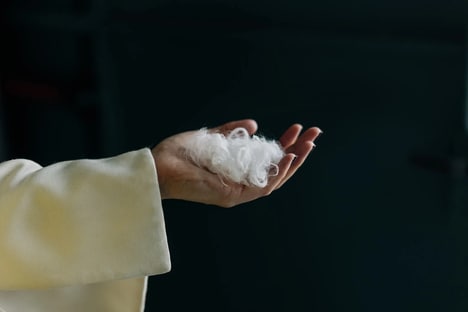
Across the fashion industry, many brands are moving away from animal skins and fur in favor of innovative plant-based alternatives—and the Stella McCartney Spring/Summer 2026 Ready-to-Wear show reimagined feathers with the same ethical mindset.
Stella McCartney has long been a pioneer in cruelty-free fashion, known for embracing materials like mycelium-based Mylo, a verified vegan alternative to animal leather, and yeast-based Microsilk inspired by spider silk. At the designer's latest runway show, Fevvers debuted as a bio-engineered, plant-based alternative to feathers that retain the lightness, softness and movement of their animal-derived counterparts. Currently, this feather alternative produced by a British-based start-up remains experimental, and widespread adoption hinges on financial support and potential regulatory changes.
Another material innovation was also introduced during the event, PURE.TECH, a programmable fabric developed to absorb air pollutants.
What Makes This Trend Stand Out
- Bio-engineered Materials
- Bio-engineered materials like Fevvers are revolutionizing the fashion industry by providing sustainable, cruelty-free alternatives to traditional animal-derived fabrics.
- Programmable Eco-fabrics
- Innovations like PURE.TECH are leading the charge towards environmental sustainability by incorporating pollution-absorbing technology into fashion.
- Plant-based Fashion Alternatives
- The rise of plant-based materials marks a transformative shift in fashion, reducing the reliance on animal products while maintaining quality and style.
Sectors Adopting This
- Sustainable Fashion
- The sustainable fashion industry is poised for growth as brands prioritize eco-friendly materials and cruelty-free production methods.
- Biotechnology in Textiles
- Biotechnology companies are crafting a new niche in textiles by developing innovative materials that mimic and surpass traditional animal-based products.
- Environmental Technology
- The integration of environmental technology in textiles is addressing environmental concerns by designing fabrics with pollution-mitigating properties.