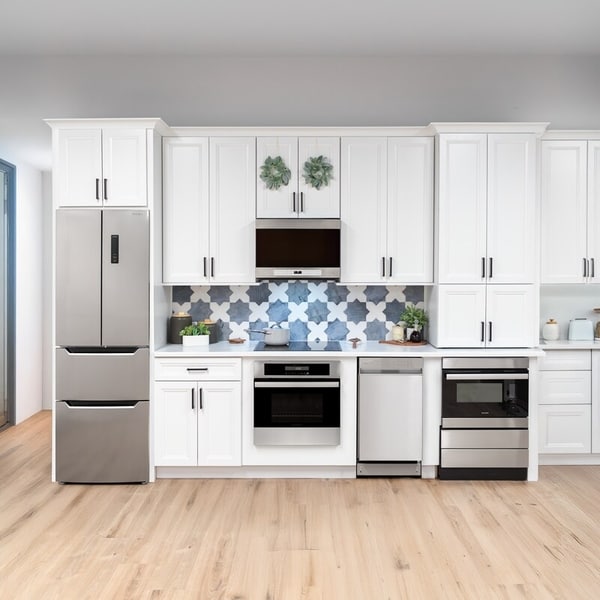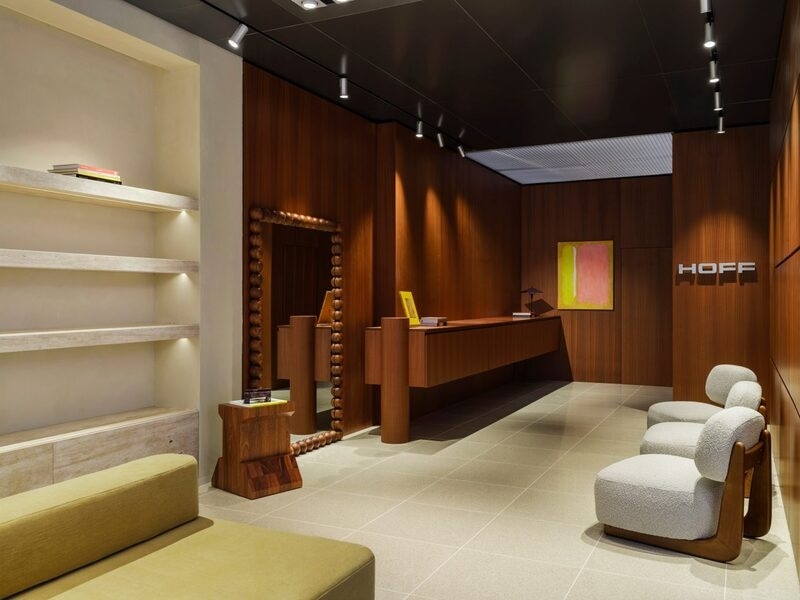
The El Departamento Hoff store is a footwear retail interior located in London that organises product display through a sequence of modular fixtures and material zones. The layout uses wall-mounted shelving, freestanding display units, and low plinths to present shoes at varied heights while maintaining clear circulation paths through the space. Timber, metal, and painted surfaces are combined to distinguish display areas without the use of enclosed partitions.
Integrated lighting is built into shelving and ceiling tracks to evenly illuminate merchandise and reduce the need for additional fixtures. Flooring finishes shift subtly between zones to signal transitions within the store. Built-in seating is positioned along circulation routes to support customer use during fitting. The storefront consists of a glazed façade that allows daylight into the interior and maintains visibility from the street.
Image Credit: Hoff
What's Driving This Trend
- Modular Display Systems
- A shift toward configurable, modular fixtures enables adaptive store layouts that can rapidly reconfigure product presentation and inventory density to match seasonal demand.
- Integrated Lighting Retail
- Shelving and ceiling-integrated illumination creates uniform, product-focused lighting strategies that reduce fixture clutter while enhancing perceived product quality.
- Material-zoned Layouts
- Use of distinct timber, metal, and painted surface zones signals functional and stylistic transitions within open-plan stores, influencing shopper flow and product association.
Who This Affects Most
- Footwear Retail
- Stores designed around multi-height displays and built-in seating shift the customer experience toward prolonged in-store engagement and personalized fitting environments.
- Retail Architecture
- Architectural approaches that prioritize glazed façades, clear circulation, and subtle floor transitions enable experiential storefronts that blend visibility with curated interior journeys.
- Visual Merchandising Technology
- Integration of lighting, modular fixtures, and material cues opens opportunities for smart display systems that dynamically adapt visual emphasis according to sales analytics.