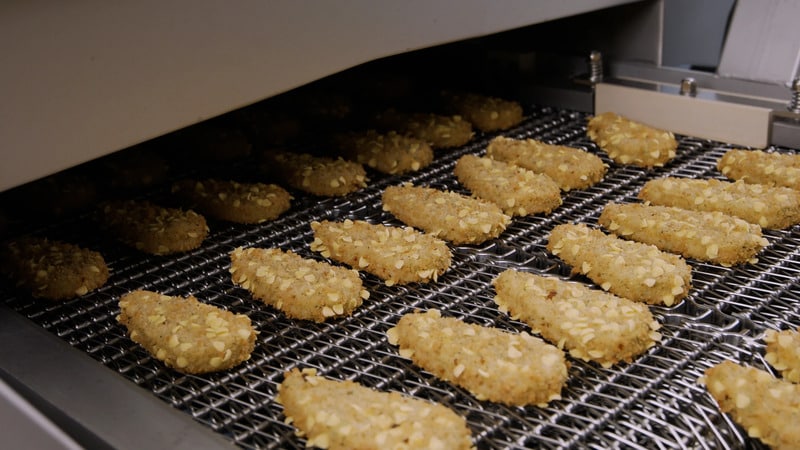
The GEA CookStar First has been added to the brand's portfolio for small and medium-sized food manufacturers to incorporate into their setup that will maximize consistent cooking and efficiency.
The oven is equipped with a twin-zone spiral design that utilizes integrated booster impingement to achieve a uniform heat distribution across the entire conveyor belt. This will reportedly achieve a 1-degree Celsius temperature variation, which is far lower than the conventional deviations in other ovens that can be as high as 6-degrees Celsius.
The GEA CookStar First oven is rated to reduce cook times by 10% to 30% and improve yields by up to 3% with a throughput rated at 1,700-kilograms per hour. The versatile equipment is rated for handling a wide range of fare including steam-cooked recipes, baked items, coated poultry, plant-based foods and more.
Key Themes Behind This Trend
- Precision Thermal Control
- Ultra-low temperature variation across conveyors creates opportunities for tighter product consistency and reduced batch rejects in high-volume food lines.
- Twin-zone Spiral Conveyors
- Integrating sequential heating zones within a compact spiral footprint presents potential for higher throughput without expanding factory floor area.
- Multi-modal Cooking Platforms
- Equipment capable of steam, impingement and baking processes on the same line opens possibilities for flexible SKUs and consolidated production workflows.
Where This Applies
- Food Manufacturing
- Smaller and mid-sized producers could achieve industrial-scale consistency and yield improvements that narrow the competitive gap with large processors.
- Plant-based Meat Production
- Consistent heat profiles promise more reliable texture and moisture control for plant-based proteins that are sensitive to cooking variance.
- Commercial Bakery
- Faster cook times with uniform browning offer potential to increase throughput while maintaining product appearance and reducing waste.