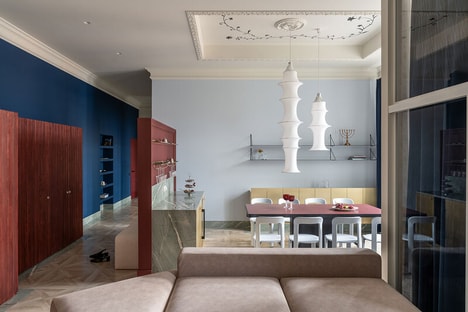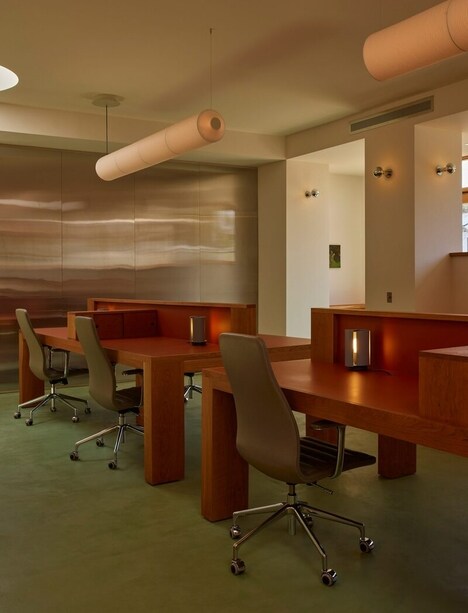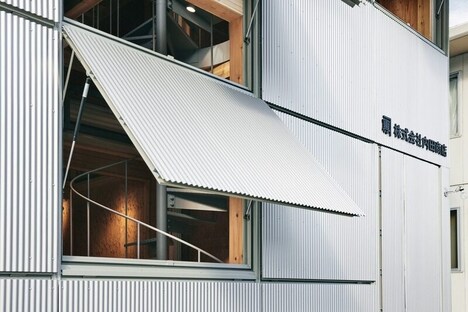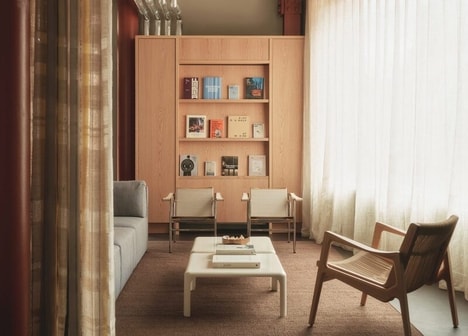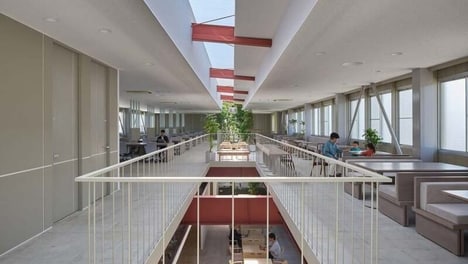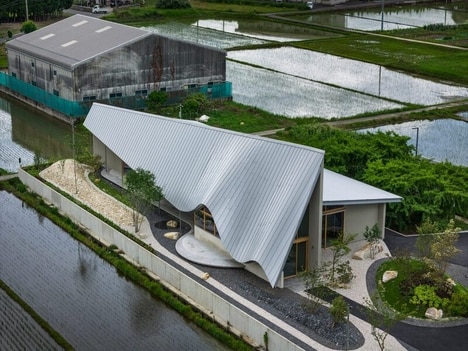
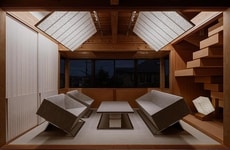
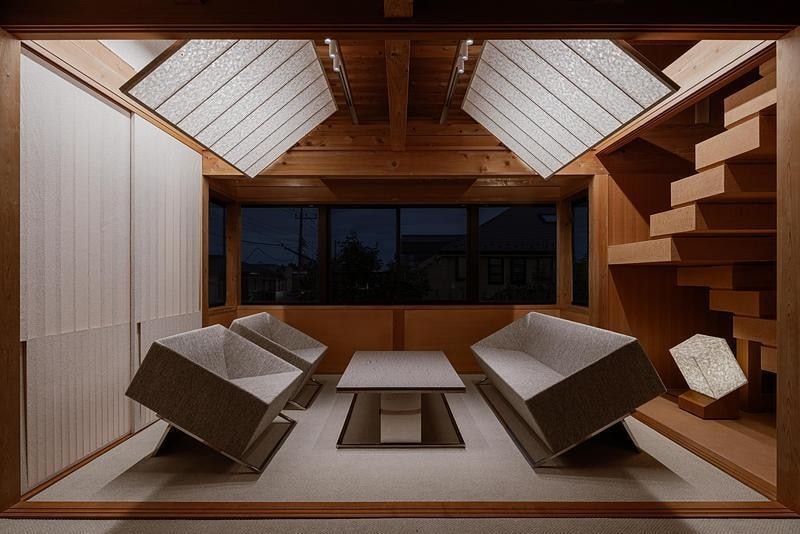
SYMBOLPLUS INC. completed the renovation of its own Tokyo office, named SYMBOLPLUS OFFICE, within an existing timber building designed by architect Akio Hayashi. This project saw the transformation of a modest seventy-six-square-meter space into a working environment that tests the proposition that architectural restraint, material honesty, and the refusal of synthetic finishes can produce an office more suited to contemporary hybrid work than any technology-forward fit-out.
The resulting SYMBOLPLUS OFFICE incorporates no synthetic materials, and the architects treated the existing timber structure as the primary spatial and atmospheric asset. Rather than contrasting old and new through deliberate juxtaposition, the design team worked to absorb additions into the building’s existing rhythm, proportion, and warmth. New partitions, surfaces, and furniture were calibrated to resonate with the original wood. Red earth sourced from Ishikawa Prefecture was applied in multiple-layered coats by a master plasterer, while Shoji screens were fabricated from Tosa washi paper.
Image Credit: Keishin Horikoshi
What Makes This Trend Stand Out
- Material-honesty Minimalism
- A shift toward visible, natural materials creates room for products and services that center provenance, repairability, and tactile authenticity over concealed synthetic systems.
- Hybrid Work Contextual Design
- Design strategies that prioritize proportion, rhythm, and human scale over technology-driven gestures open possibilities for workspace formats optimized for intermittent presence and focused collaboration.
- Craft-integrated Interiors
- The reintroduction of artisan techniques and regional materials into commercial fit-outs suggests demand for bespoke, limited-run components and skilled labor partnerships that differentiate spaces.
Sectors Adopting This
- Architecture and Interior Design
- Practice models oriented around conservation, material calibration, and subtle insertions into existing structures present alternative value propositions to full demolish-and-rebuild approaches.
- Commercial Real Estate Development
- Owners of small to mid-size timber and masonry buildings may find new market segments by repositioning assets for qualitative workplace experiences that favor authenticity over maximal amenities.
- Sustainable Building Materials
- Suppliers of natural plasters, specialty papers, and certified timber could experience growth tied to demand for non-synthetic finish systems and transparent supply chains.