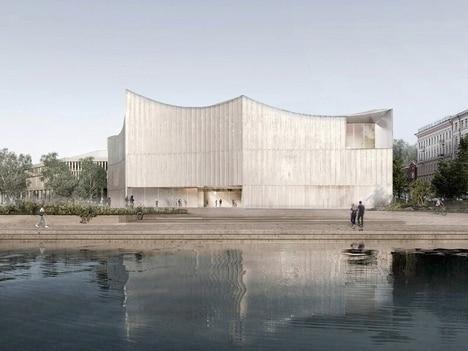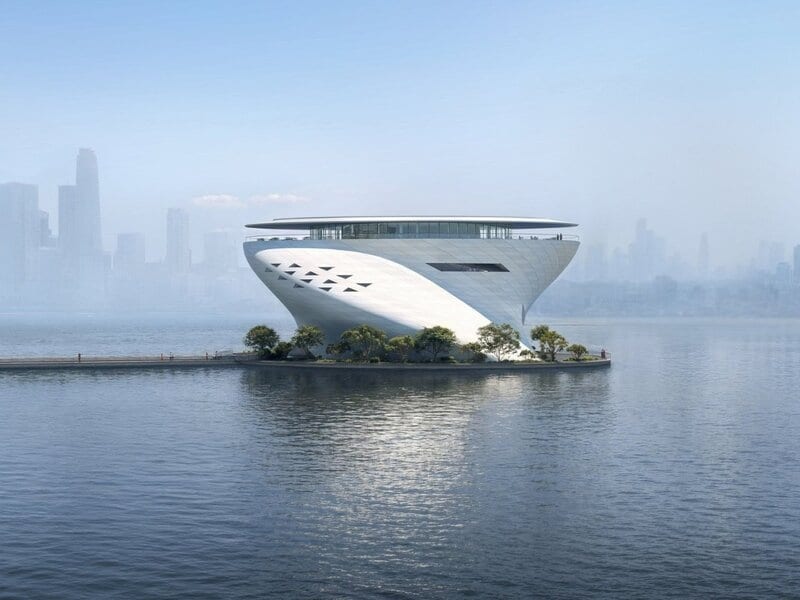
Dubai Museum of Art by Tadao Ando evokes water, light and heritage, establishing a new cultural landmark along Dubai Creek. The five-story structure rises from a circular platform surrounded by reflective pools that mirror its smooth white curves. Triangular openings along the façade filter natural light into geometric patterns across the concrete interior, creating a meditative rhythm that shifts throughout the day. The design draws from the city’s maritime past and pearl-diving legacy, merging tradition with minimalist precision.
The museum’s layout unfolds as a sequence of contemplative spaces, where light, sound, and material converge in quiet balance. Ando’s signature restraint allows the architecture itself to narrate the experience, emphasizing purity and proportion over spectacle. By integrating reflection, water, and open air, the Dubai Museum of Art becomes both an homage to place and a timeless exploration of form, emotion, and cultural memory.
Image Credit: Tadao Ando
Key Themes Behind This Trend
- Cultural Heritage Architecture
- Architectural designs are increasingly incorporating elements that pay homage to local history and culture, creating spaces that serve as both educational and aesthetic experiences.
- Minimalist Design Aesthetics
- The rise of minimalist architecture emphasizes purity and proportion, blending simplicity with functionality to create calming and contemplative spaces.
- Reflective and Interactive Environments
- By using reflective surfaces and dynamic light patterns, modern buildings enhance the visitor experience, fostering deeper engagement and emotional resonance with the space.
Where This Applies
- Cultural Tourism
- As museums and art centers adopt culturally resonant designs, they attract tourists seeking authentic and educational experiences rooted in local heritage.
- Sustainable Architecture
- Innovative architectural approaches in sustainability use elements like water and natural light to create energy-efficient buildings that harmoniously connect with their surroundings.
- Lighting and Interior Design
- Advancements in lighting design that incorporate natural light filtering techniques provide new opportunities for creating visually striking and mood-enhancing interior environments.