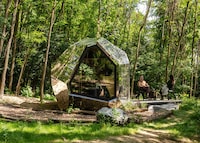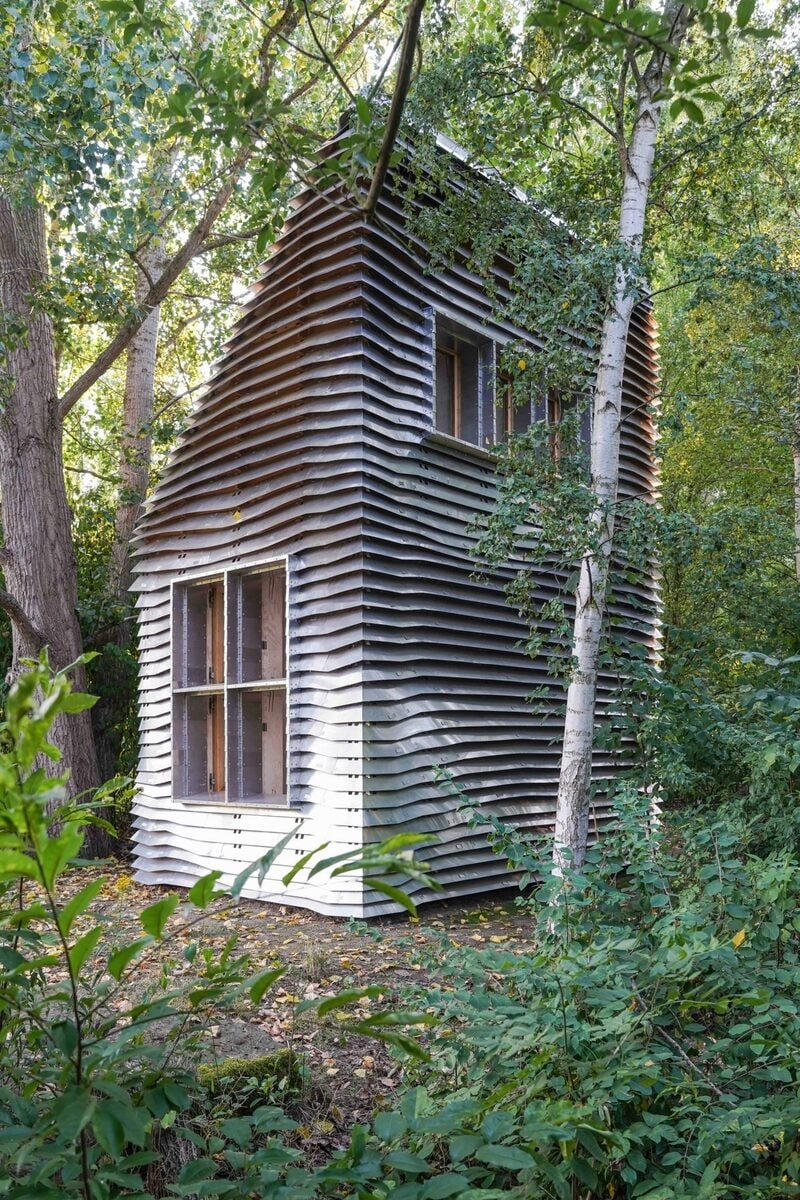
The Digital House by Julian Krüger and Benjamin Kemper reimagines micro-architecture with a compact, aluminum-clad cabin that assembles without screws, nails, or adhesives. Nestled in a forest near Wismar, Germany, the 16 m² structure uses laser-cut recycled aluminum panels over a precisely milled plywood frame. Its modular system allows for easy on-site assembly by just two people, reinforcing its ethos of flexibility, portability, and low environmental impact.
Inside, the Digital House features pine plywood paneling, a lofted sleeping space, and a ribbon of continuous windows that fill the space with natural light. Four large cutouts connect the interior to the forest surroundings, while a screw pile foundation lifts the structure off the ground without damaging the site. Lightweight, compact, and digitally fabricated, the cabin presents a thoughtful model for sustainable retreat living in remote or protected environments.
Image Credit: Julian Krüger and Benjamin Kemper
Why This Trend Is Growing
- Plug-in Micro-architecture
- The innovative approach of plug-in construction for micro-architecture allows for quick and tool-free assembly, appealing to those seeking flexibility and minimal environmental disruption.
- Sustainable Digital Fabrication
- Digital fabrication using laser-cut recycled materials represents a green advancement in construction, offering environmentally friendly solutions for remote locations.
- Nature-integrated Living Spaces
- Designs that incorporate large cutouts and seamless indoor-outdoor connections promote a harmonious relationship with nature, reimagining how people interact with their surroundings.
Industries Being Reshaped
- Eco-friendly Construction Materials
- The use of recycled aluminum panels highlights a growing interest in sustainable materials that minimize waste and energy use in the building industry.
- Compact Living Solutions
- The demand for compact living is spurring innovations in modular construction, appealing to urbanites and environmentalists alike seeking efficient use of space.
- Off-grid and Remote Accommodation
- Remote accommodations benefit from innovations in portable and easily assembled structures, catering to eco-tourism and adventure travel markets.