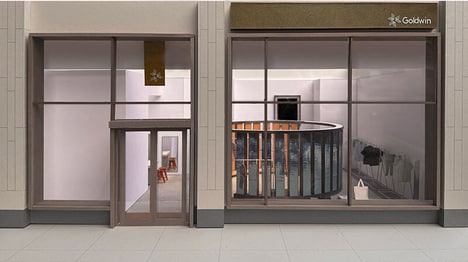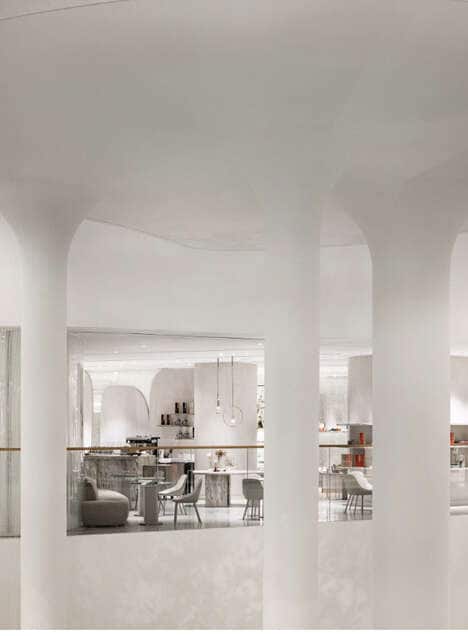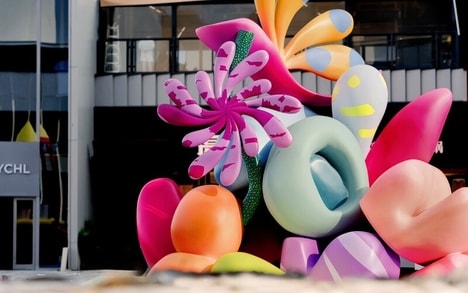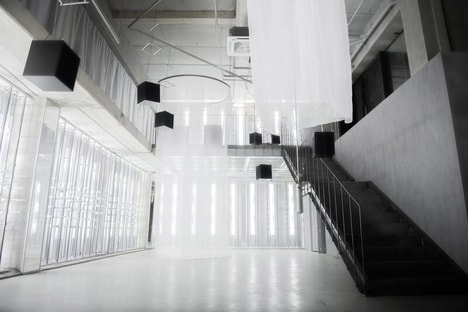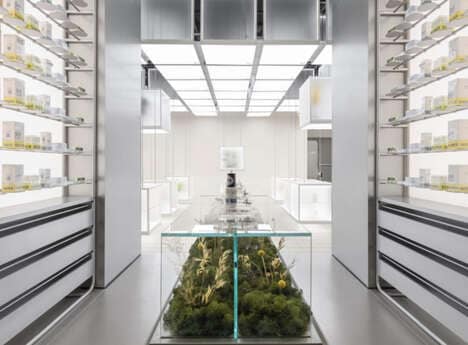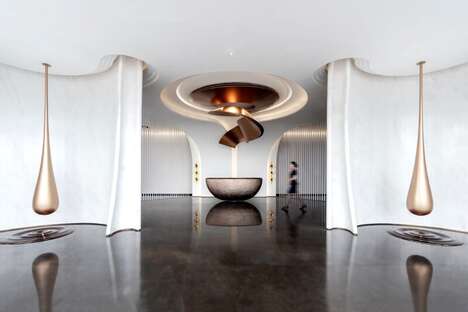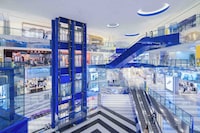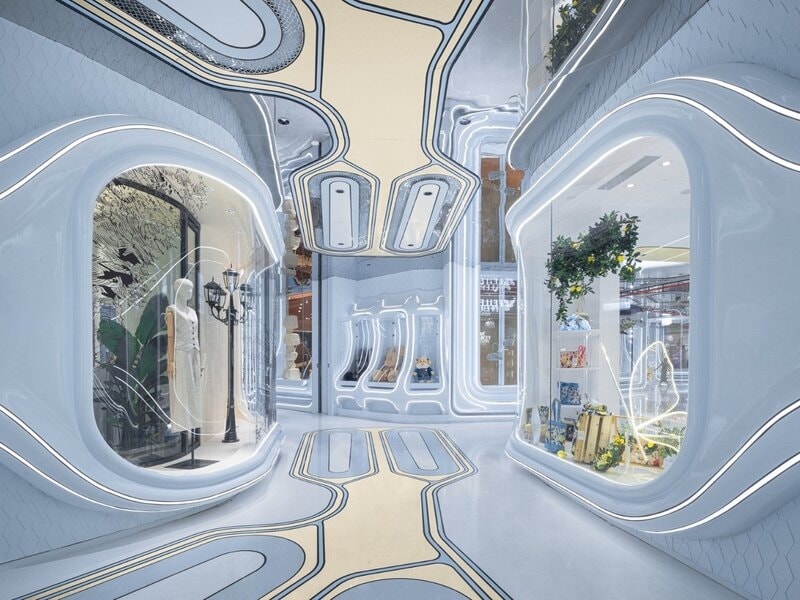
The Deji Plaza Phase II expansion transforms part of its Nanjing shopping complex into a Commercial & Art Bazaar where retail meets immersive design. Created by Li Xiang of X+Living, the space replaces traditional storefront layouts with fluid pathways, modular displays, and sculptural forms that evoke both ocean depths and space capsule interiors. Visitors are guided through a journey of shifting perspectives, where shopping becomes a process of discovery rather than a direct transaction.
Blue gradients, mirrored stainless steel, and soft curves recreate the shimmering effect of light underwater, while oversized storefront windows and open sightlines enhance visual flow. A suspended whale sculpture, playfully adorned with graffiti, anchors the theme, while illuminated escalator tunnels heighten the sense of transition between zones. By blending art installation elements with functional retail planning, the space delivers an atmosphere that is as emotionally engaging as it is commercially dynamic.
Image Credit: X+Living
Key Themes Behind This Trend
- Immersive Retail Design
- Retail environments are evolving into immersive experiences, integrating art and interactive elements to transform traditional shopping into explorative journeys.
- Fluid Architectural Layouts
- Retail spaces are adopting fluid and flexible architectural designs to create dynamic and engaging pathways that encourage exploration and discovery.
- Art-driven Commerce
- The melding of art installations within retail environments is reshaping how consumers emotionally and visually interact with commercial spaces.
Where This Applies
- Retail Architecture
- Innovative design in retail spaces prioritizes immersive and flexible layouts to redefine consumer shopping experiences.
- Experiential Marketing
- Retailers are embracing experiential marketing by transforming stores into artistic and interactive spaces that capture consumer interest.
- Interactive Art Installations
- The integration of interactive art within commercial environments is bridging the gap between functional spaces and experiential engagement in retail sectors.