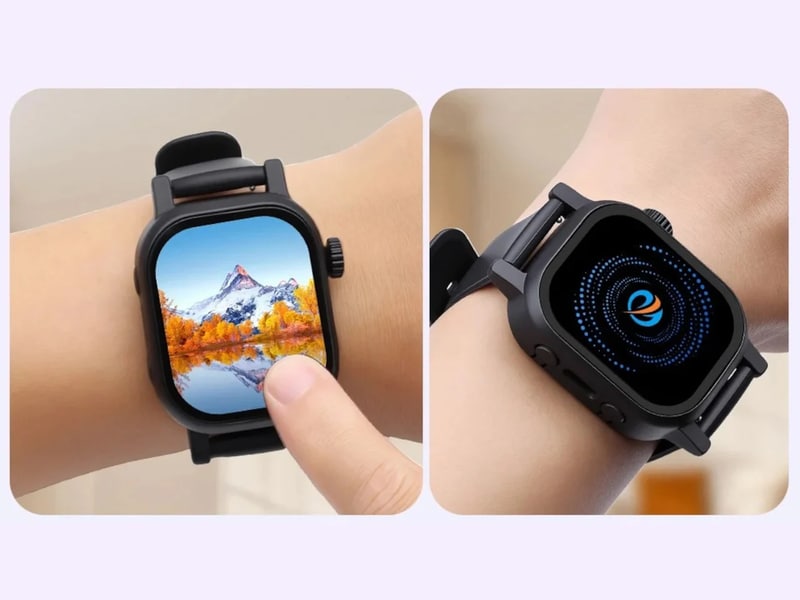
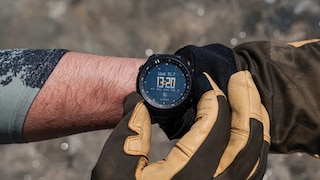
The CrowPanel Watch Display is a smartwatch development module built around the ESP32-S3 microcontroller for creating custom wearable devices. The wrist-sized board integrates a 2.01-inch IPS touchscreen with a 240×296 resolution, capacitive touch support, and a 178-degree viewing angle. Physical controls include a rotary encoder that functions like a watch crown alongside a dedicated side button for navigation. The module also incorporates a microphone, speaker, gyroscope, vibration motor, Wi-Fi, Bluetooth 5, and expansion contacts, while leaving the enclosure, strap, and battery selection to the builder.
Powered by a dual-core Xtensa LX7 processor running at up to 240MHz, the module supports wireless connectivity for notifications, weather updates, smart home controls, and voice-enabled interactions. The development board omits integrated GPS and heart rate monitoring, focusing instead on flexible hardware for custom applications. Battery contacts allow users to choose their preferred capacity and form factor during assembly.
Image Credit: Elecrow
Part of the cluster
Quiet Tracking
Health devices shift toward low-visibility formats that deliver selective insights
Explore the cluster
Key Themes Behind This Trend
- Modular Wearable Prototyping
- Open smartwatch modules create room for faster experimentation with niche wearable concepts, from workplace tools to hobbyist health-adjacent devices.
- Customizable Smartwatch Hardware
- User-selected batteries, enclosures, and straps signal opportunities for personalized devices that move beyond standardized consumer smartwatch formats.
- Voice-enabled Diy Interfaces
- Integrated microphones, speakers, and wireless connectivity expand the potential for low-cost voice-controlled wearables tied to smart homes and mobile services.
Where This Applies
- Wearable Technology
- Developer-focused watch displays support a more flexible product ecosystem where specialized devices can be built for targeted user groups.
- Consumer Electronics
- ESP32-based modular boards lower barriers for small teams and makers to test connected products without full-scale hardware development.
- Smart Home
- Wrist-based controls with Wi-Fi, Bluetooth, touch, and voice features introduce compact interface options for managing connected environments.