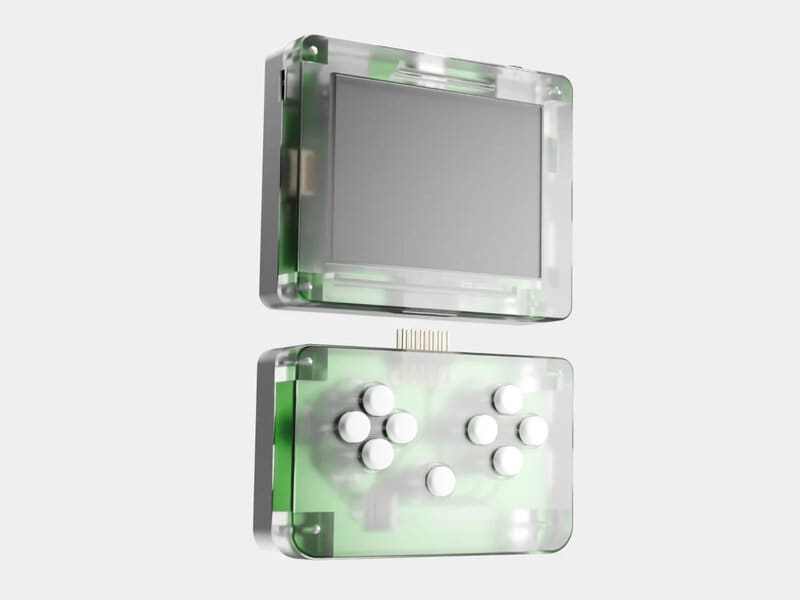
The Pocketbyte reimagines the personal digital assistant as an open-source handheld computer for note-taking, gaming, music playback, and software development. Powered by an ESP32-S3 dual-core processor clocked at 240MHz, the device features a 2.8-inch IPS display, a 1,500mAh rechargeable battery with USB-C charging, and a magnetic connector that supports interchangeable input modules. Available options include a gamepad controller and a QWERTY keyboard, while the open hardware architecture allows users to develop additional modules.
PocketbyteOS includes a built-in Wi-Fi app store for downloading community-developed software, and the platform supports custom firmware through its Apache 2.0-licensed development library. The handheld is compatible with Retro-Go emulation for SNES, Sega Genesis, Game Boy Color, and NES games, while MP3 and WAV playback is supported through a built-in speaker and 3.5mm headphone jack.
Image Credit: Om Rawaley
What Makes This Trend Stand Out
- Modular Pocket Computing
- Interchangeable input modules are reshaping handheld devices into flexible platforms that can shift between productivity, entertainment, and development use cases.
- Open-source Hardware Ecosystems
- Community-built firmware, accessories, and software marketplaces create room for niche device ecosystems that evolve beyond traditional manufacturer-controlled product cycles.
- Retro-ready Micro Devices
- Compact emulation-capable computers blend nostalgia with portable utility, opening pathways for low-cost gaming, media, and maker-focused consumer electronics.
Sectors Adopting This
- Consumer Electronics
- Small-scale modular devices point to new product categories where customization, repairability, and community expansion differentiate personal technology.
- Gaming Hardware
- Handheld systems with swappable controls and emulator support highlight demand for affordable, adaptable alternatives to closed gaming consoles.
- Developer Tools
- Open firmware libraries and onboard app distribution position pocket computers as accessible experimentation environments for hobbyists, students, and embedded software creators.