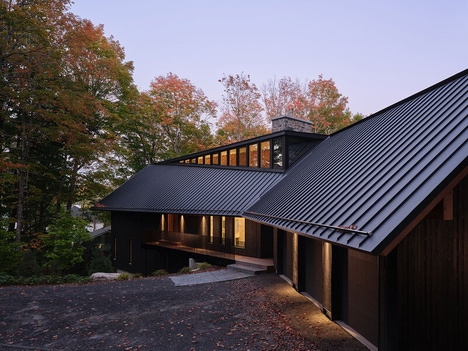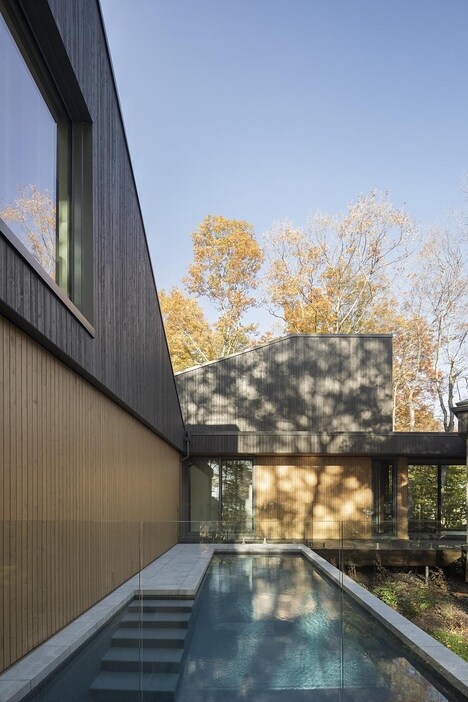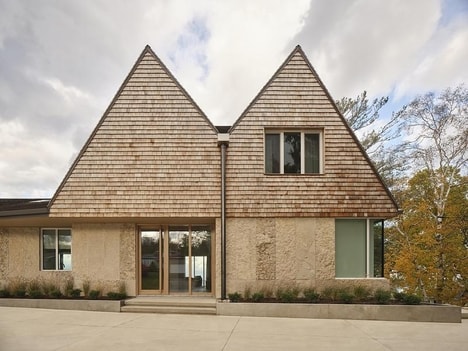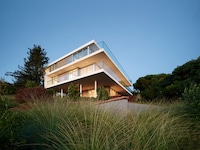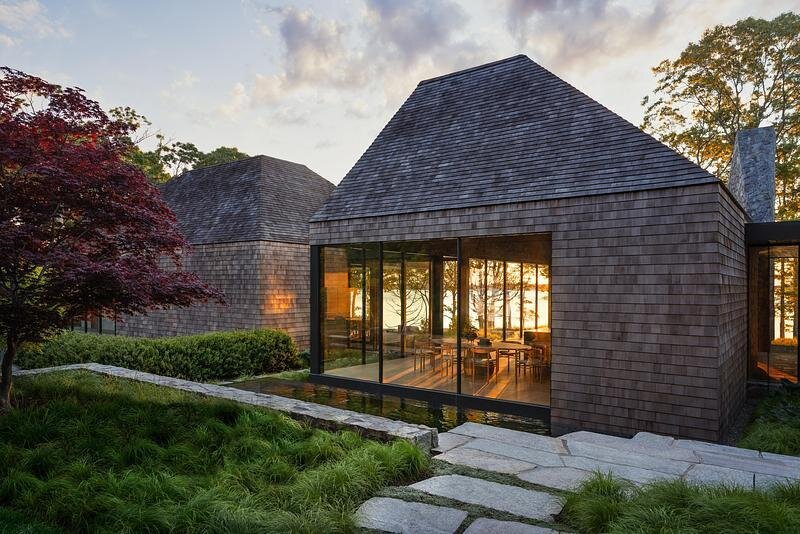
LaGuardia Design Group, an award-winning landscape architecture firm with studios in Water Mill and New York City, has completed Sag Harbor Bay. This thoughtfully reimagined waterfront landscape on the East End balances contemporary living with natural beauty through native plantings, carefully crafted outdoor spaces, and resilient shoreline strategies.
The Sag Harbor Bay project is located on a heavily wooded, sloping waterfront site and required careful planning to preserve the surrounding Oak and Cedar Forest, with buildings, walkways, terraces, and the pool all positioned to follow the natural contours of the land and integrate seamlessly into the existing topography. A single variety of granite, hand-selected from a local New York quarry, was digitally surveyed and modelled using 3D scanning technology to ensure precise placement.
Image Credit: Eric Petschek
Why This Trend Is Growing
- Resilient Waterfront Design
- Climate-adaptive shorelines that blend erosion control with high-end residential aesthetics create new value in coastal property development.
- Native Landscape Integration
- Biodiverse planting strategies rooted in local ecosystems are reshaping luxury outdoor spaces around sustainability, habitat preservation, and lower maintenance needs.
- 3d-scanned Material Planning
- Digitally modeled stone and site materials introduce precision, waste reduction, and customization opportunities for complex landscape construction.
Industries Being Reshaped
- Landscape Architecture
- Premium firms are differentiating through ecological design, advanced visualization tools, and site-specific planning for environmentally sensitive properties.
- Luxury Real Estate
- Waterfront homes increasingly gain market appeal from resilient outdoor environments that combine privacy, natural beauty, and climate preparedness.
- Construction Technology
- Scanning, modeling, and digital fabrication workflows are expanding the role of data-driven precision in traditionally handcrafted exterior projects.