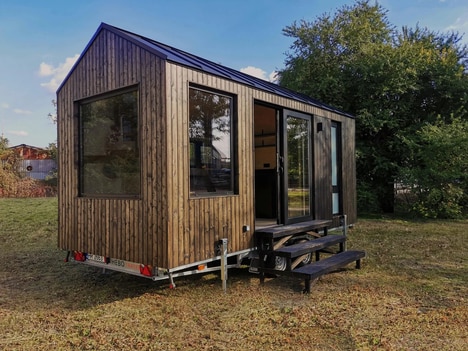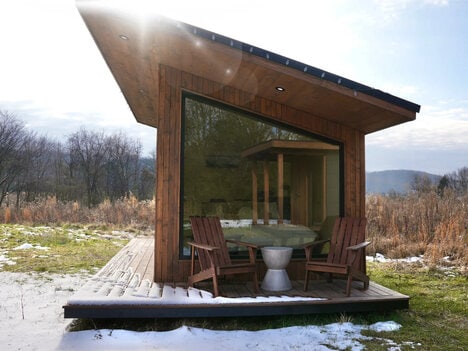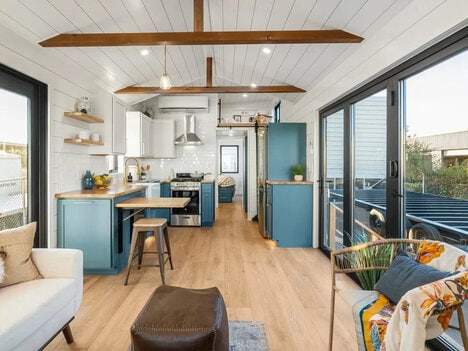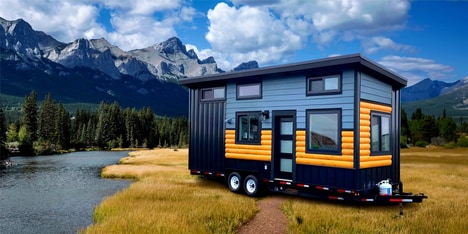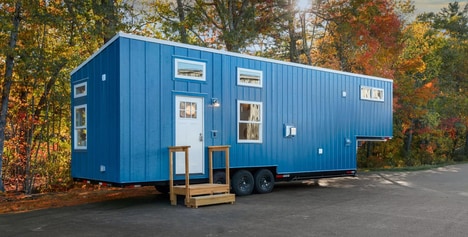
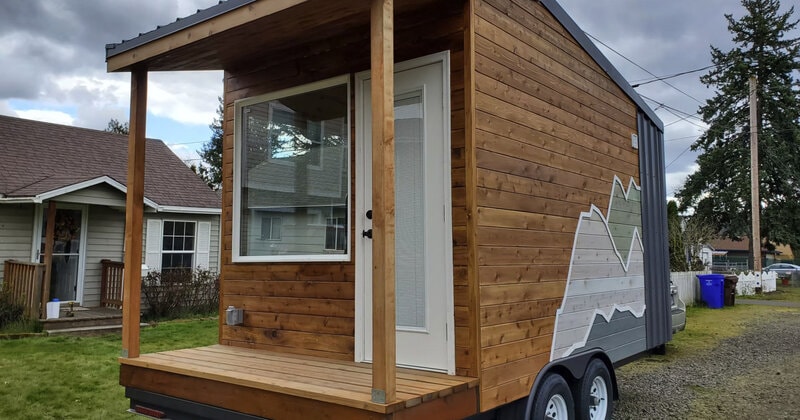
Backcountry Tiny Homes has packed the Traveler into a trailer-based tiny house that favors portability over square footage. The compact build suits people who move often or only need short stays, while still giving them a place to sleep, cook and wash up.
The home measures 17 ft long and 120 sq ft inside, with a single-floor layout and a sofa bed for two. Its kitchen and bathroom keep the footprint small, but the setup still covers the basics for travel or guest use.
At three versions and a starting price of $37,890, the Traveler turns tiny-house living into a more reachable buy for buyers who want mobility without a larger build. Its size and pricing also sharpen the split between family-sized tiny homes and units made for one or two people.
Image Credit: Backcountry Tiny Homes
Why This Trend Is Growing
- Micro-mobile Living
- Compact trailer homes reflect a shift toward smaller, transportable dwellings that make flexible living more attainable for solo travelers, couples, and remote workers.
- Affordable Tiny Housing
- Lower-priced tiny homes are expanding access to alternative housing models by separating essential shelter functions from larger, more expensive residential builds.
- Short-stay Minimalism
- Minimalist layouts designed for temporary stays create room for new hospitality, guest housing, and recreational living formats with reduced space requirements.
Industries Being Reshaped
- Tiny Home Manufacturing
- Manufacturers can differentiate through ultra-compact floor plans, modular options, and price tiers that address buyers prioritizing mobility over square footage.
- Outdoor Recreation
- Portable tiny homes sit between RVs and cabins, opening new possibilities for campgrounds, backcountry lodging, and travel-focused accommodation providers.
- Real Estate
- Small movable dwellings introduce alternative inventory for accessory housing, rental income, and low-commitment residential use on private or recreational land.