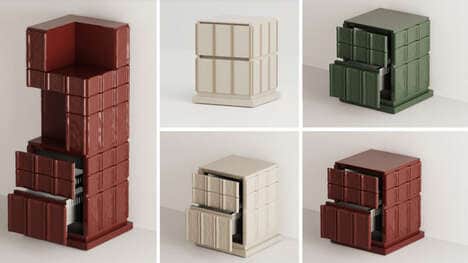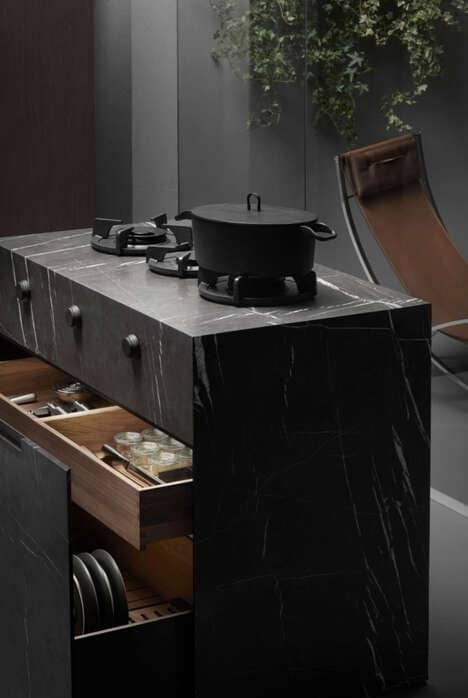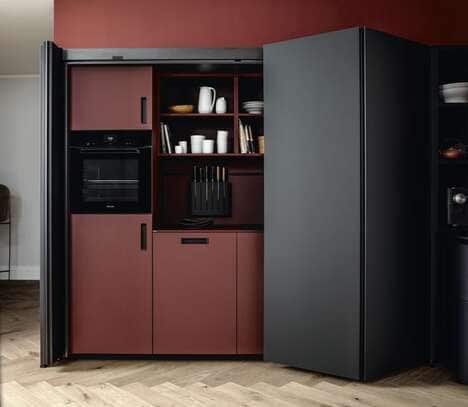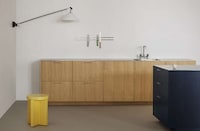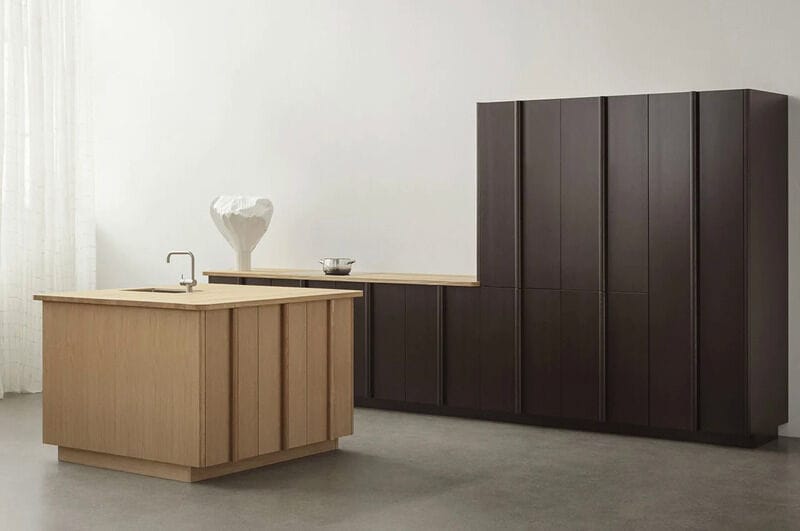
French designer Inga Sempé created the Column Kitchen for Danish imprint Reform, which is made to be what the brand describes as 'warm and different.' It is a subtle kitchen unit that is made with soft edges along the sides and handles. It comes in a range of components that are arranged together to create a column that stretches from the top to the bottom of every door.
When looking closely at the unit, the columns seem to have a mushroom-shaped profile from the top angle. Sempé notes, “Industrial kitchens often look the same as home kitchens these days. Like a sum of cubes. We are obliged to live surrounded by these cubes, and I’m fed up with it. I just wanted to do something warm and different. Beautiful and rich, but not antipathetic.”
Image Credit: Reform
Key Themes Behind This Trend
- Industrial Minimalism
- The trend towards industrial minimalism in kitchen design is challenging the traditional cube-like aesthetic and offering a warmer, more unique approach.
- Soft Edges
- The incorporation of soft edges in kitchen unit design adds a subtle touch of elegance and breaks away from the sharp, angular look.
- Customizable Components
- The use of modular components that can be arranged together allows for a diverse range of kitchen unit designs, giving consumers more control over the final look of their kitchen.
Where This Applies
- Kitchen Design
- The kitchen design industry can leverage the trend of industrial minimalism to offer customers a more modern and personalized experience.
- Furniture Manufacturing
- Furniture manufacturers can explore the use of soft edges in their designs to create a more visually appealing and comfortable product.
- Sustainable Materials
- The trend towards customizable components presents an opportunity for the sustainable materials industry to provide eco-friendly options for kitchen units that can be easily assembled and disassembled.